Stop Chimney Damage Before It Demands a Rebuild
Chimney problems rarely start with something dramatic. They usually begin with a few small cracks in the mortar or a little flaking brick that is easy to ignore. Then one winter turns into a few winters, water keeps sneaking in, and suddenly that "little issue" has turned into a chimney that needs major work.
In the Pittsburgh area, we see this pattern all the time. Our freeze-thaw cycles, steady rain, and many older homes are hard on chimney masonry. When small problems are left alone, they tend to spread deeper into the structure, the flue, and even into the home itself.
The good news is that most of this can be avoided. Timely chimney masonry repair in Pittsburgh costs less, takes less time, and is far less stressful than a full chimney rebuild. With the right care, your chimney can stay solid, safe, and ready for many heating seasons ahead. In this article, we will walk through how small issues grow, what warning signs to watch for, which repairs help the most, and why a certified local chimney professional makes such a difference.
How Small Masonry Issues Turn Into Big Chimney Failures
Chimney damage often starts so small that it is easy to overlook. Early warning signs on the outside might include:
- Hairline cracks in the mortar between bricks
- Brick faces that flake or pop off at the surface
- Tiny gaps around the chimney crown or cap
- Mortar joints that look dry, sandy, or slightly recessed
These may not seem like a big deal. But once there is even a thin opening, water can get in. When temperatures drop, that trapped water freezes and expands. This puts pressure on the surrounding brick and mortar and slowly pushes everything farther apart.
Over time, that cycle leads to:
- Larger cracks and missing chunks of mortar
- Bricks that become loose, tilt, or fall out
- Gaps where the chimney meets the roof or crown
- Weak spots where the structure no longer supports weight the way it should
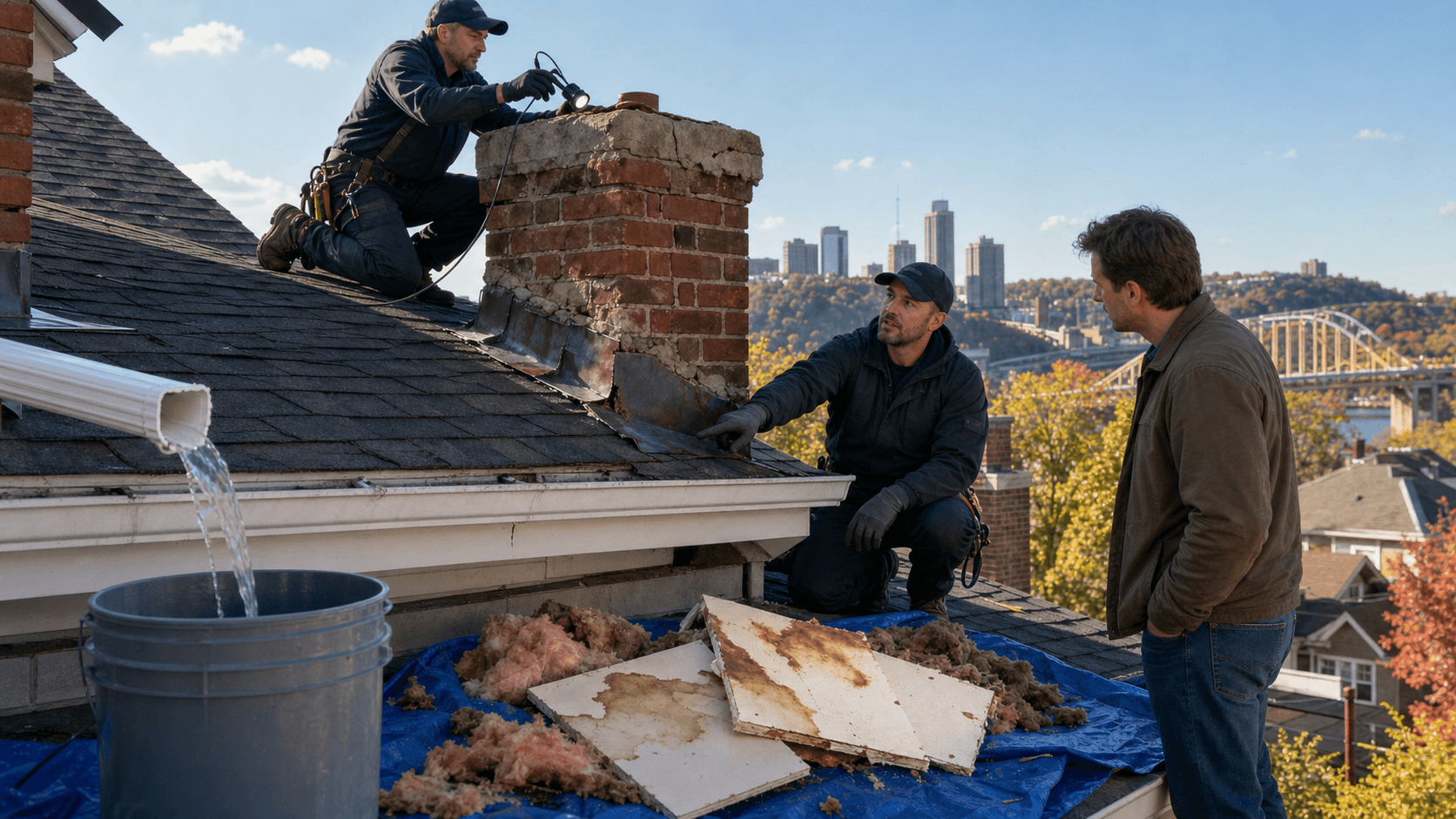
If this is ignored for long enough, the damage does not stay on the surface. It can spread to the flue liner, which is meant to contain heat, smoke, and gases. A damaged liner can increase the chance of chimney fires or allow carbon monoxide and smoke to slip into living spaces. Water that makes its way inside can soak nearby wood framing and drywall, leaving stains and musty odors. At a certain point, repairs are no longer enough and parts of the chimney must be rebuilt.
Why Timely Chimney Masonry Repair in Pittsburgh Saves You Thousands
Local weather makes timing especially important. After a long, cold season, late spring is often when winter damage is most obvious. Mortar that looked solid in the fall might show fresh cracks, and bricks that were tight can start to shift. Having a professional inspect and repair at this point can prevent another full round of damage when cold weather returns.
When issues are caught early, repairs are more focused and less disruptive. Common targeted repairs include:
- Tuckpointing worn mortar joints
- Replacing a few damaged bricks instead of a whole section
- Repairing or rebuilding a cracked crown
- Applying professional waterproofing to exposed masonry
These types of repairs usually keep the existing structure in place. A full rebuild, on the other hand, often means tearing down large sections of the chimney, setting up extensive equipment, possibly dealing with permits, and living with weeks of noise and mess.
Timely repairs also help protect your whole home. A strong, well-sealed chimney keeps water away from your roof, attic, and interior walls. It supports a steady draft for safer fires, and it helps older homes in our area stay in good shape for insurance checks or real estate inspections.
Key Signs Your Chimney Needs Masonry Repair Right Now
You do not need to climb onto the roof to spot some of the biggest red flags. From the ground and inside your home, there are many clues that it is time to call a professional.
On the outside, watch for:
- Crumbling or missing mortar between bricks
- Bricks that look chipped, soft, or flaking apart
- A chimney that seems to lean or tilt instead of standing straight
- A crown that is cracked, broken, or pulling away at the edges
- Rust streaks down the bricks from metal parts near the top
Inside, pay attention to:
- Water marks or staining on ceilings or walls near the chimney
- A musty or damp smell coming from the firebox
- Pieces of tile, brick, or mortar on the floor of the fireplace
- Gaps or cracks around the firebox or where masonry meets the wall
When these signs show up in late spring or early summer, that is actually good news. It gives you time to have a full inspection, plan any chimney masonry repair in Pittsburgh that is needed, and get the work finished before everyone starts thinking about the first fire of the season. Waiting until the weather turns cold again often means crowded schedules and rush jobs.
How Professional Masons Repair Chimneys Without a Full Rebuild
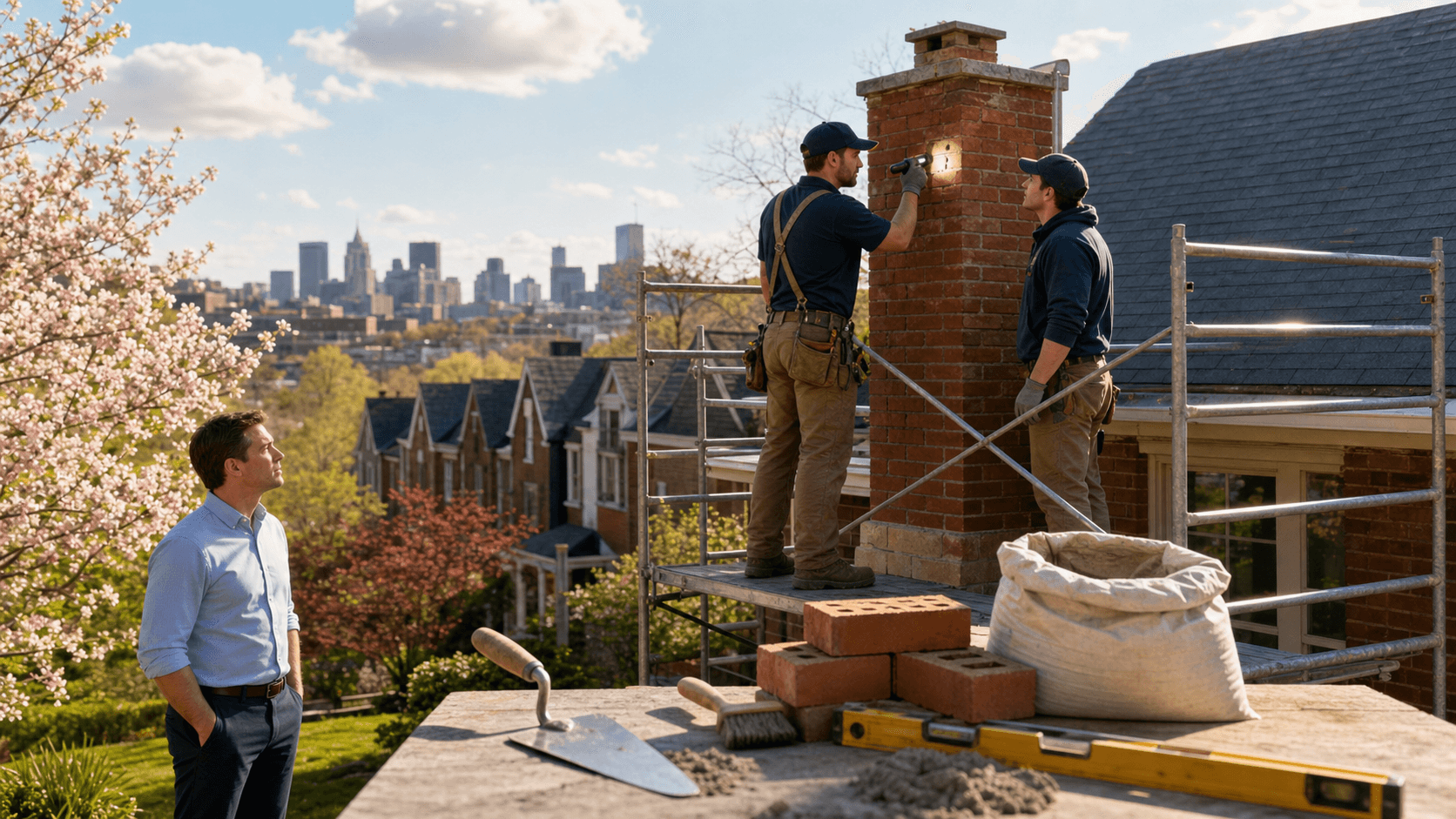
A trained chimney professional will start with a careful inspection, inside and out. The goal is to see not just the visible cracks, but also what is happening in the flue, at the roofline, and in the attic area. This helps make sure any repair plan goes to the root of the problem.
Common repair methods include:
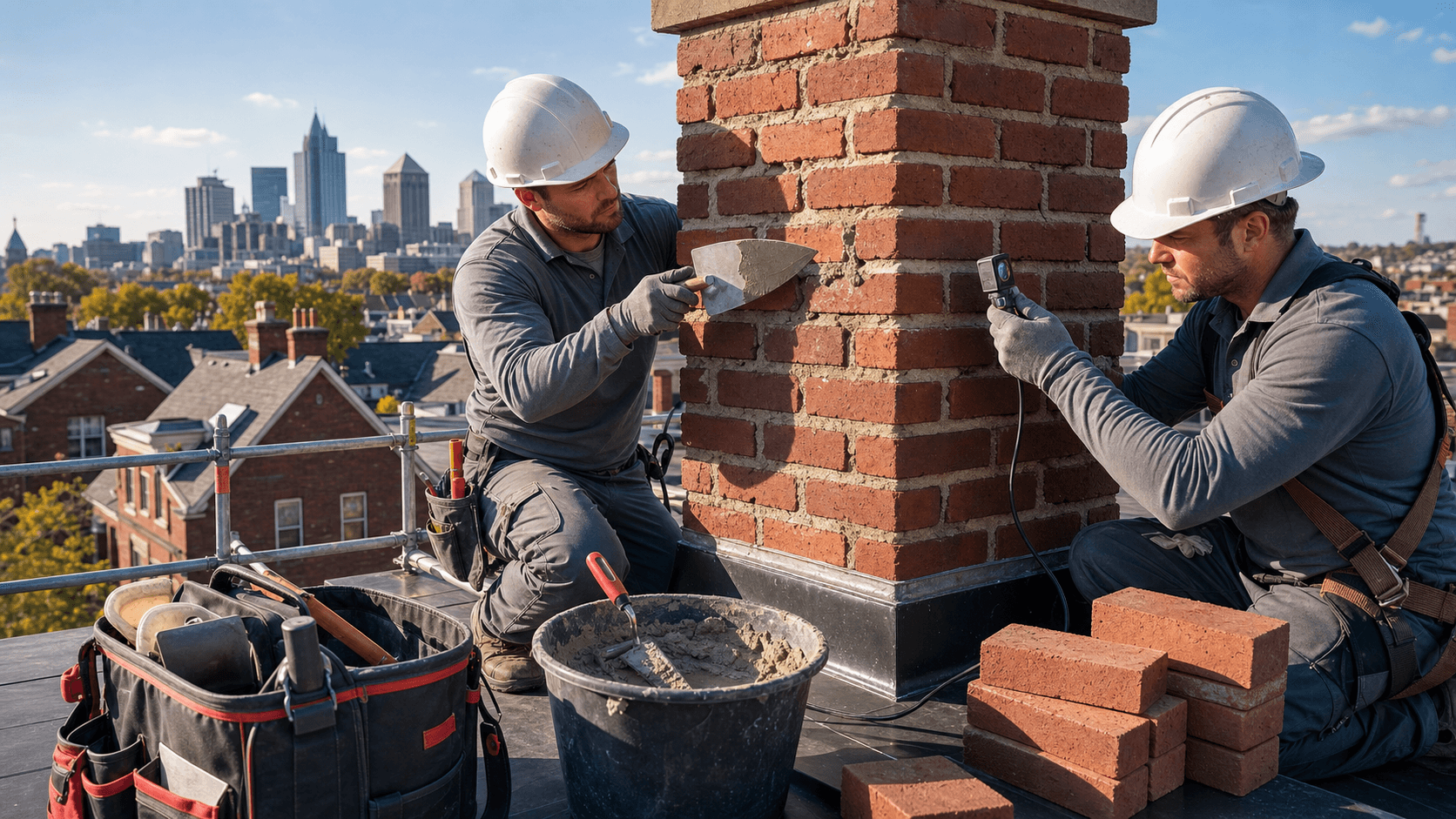
- Tuckpointing, where failing mortar is removed and replaced with fresh, strong mortar
- Selective brick replacement for damaged or spalled bricks
- Crown repair or full crown rebuilding to keep water out from the top
- Installing or replacing chimney caps to block rain and debris
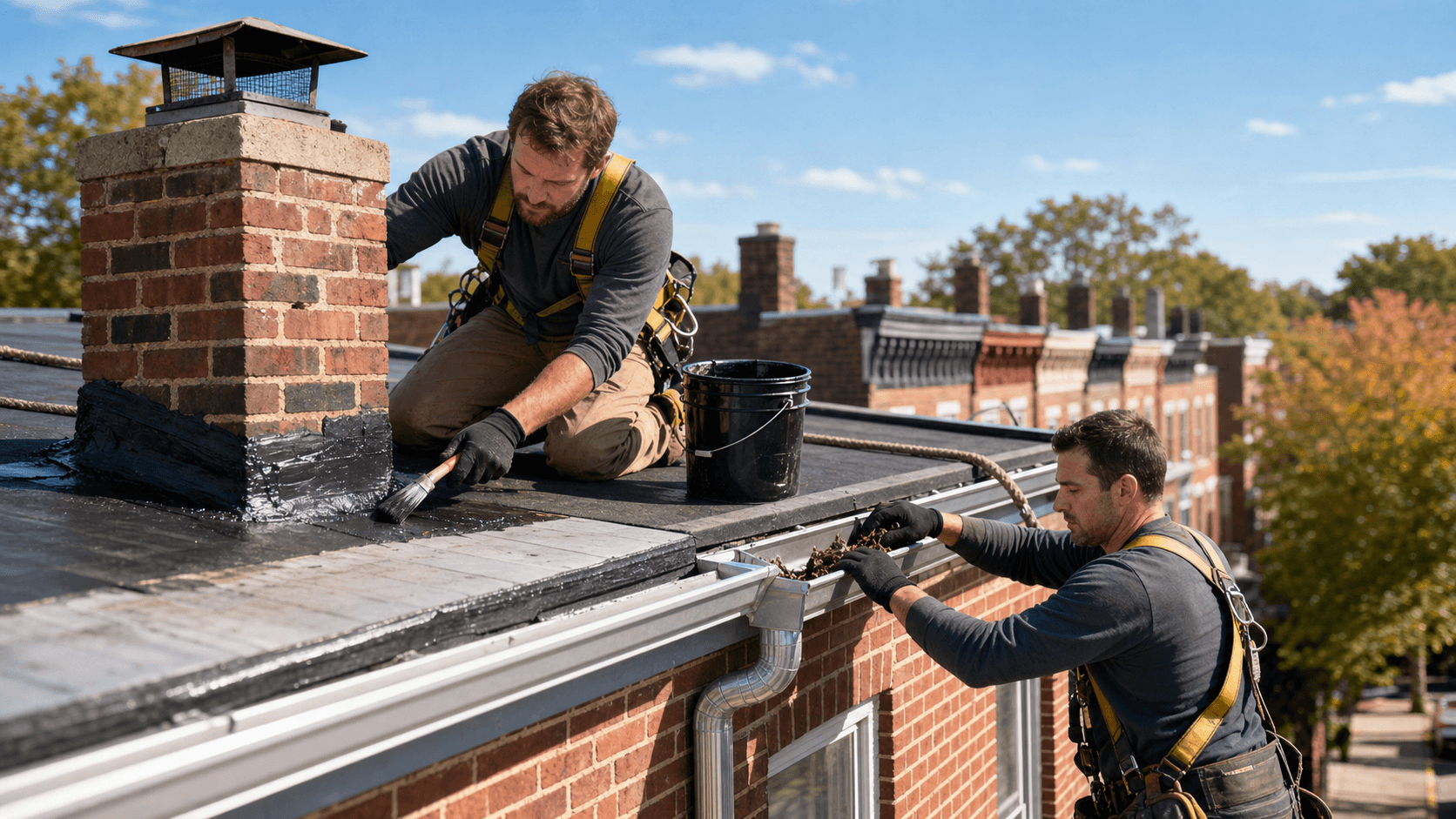
- Applying chimney-specific waterproofing products to exposed masonry surfaces
CSIA-certified technicians are trained to look at the entire chimney system, not just the surface. They understand how masonry, flues, and fuel-burning appliances all work together. During an inspection, they can explain whether focused repairs are enough or if a rebuild is truly needed.
A rebuild is usually only recommended when there is clear structural failure, major leaning, or deep damage that cannot be safely patched. An honest evaluation helps homeowners avoid unnecessary rebuilds and instead invest where it makes the most sense.
Choose the Right Local Expert to Protect Your Chimney Investment
Not all masonry work is the same. A chimney is a safety system as much as it is a brick structure, so the person working on it should understand both. When you are looking for help, it is smart to ask for:
- CSIA certification for chimney work
- Specific experience with masonry repairs on older Pittsburgh homes
- Proof of insurance and any required licensing
- Local references and photos of similar projects before and after
- Clear written explanations of the work being recommended
A general handyman might be able to patch a wall, but a chimney has unique needs, especially around flues, crowns, and load-bearing sections. A company that focuses on chimney inspections, sweeping, and repairs every day is more likely to spot hidden problems and fix them correctly the first time.
As a family-owned, CSIA-certified chimney sweeping and repair company serving the greater Pittsburgh area, we understand how local weather and older masonry interact. We have seen how small cracks turn into big headaches when they are left alone, and we have also seen how thoughtful, timely repairs keep chimneys safe and steady for many years.
Protect Your Chimney and Home With Expert Repairs
If you are seeing cracks, loose bricks, or water damage, our team at Chimney Fixers SEO is ready to help restore your chimney's safety and appearance. Take a look at some of our recent chimney masonry repair in Pittsburgh projects to see the quality of our workmanship. When you are ready to schedule an inspection or get a quote, simply contact us and we will respond promptly.