Stop Summer Storms From Sneaking Into Your Rowhome
Heavy June rain in Pittsburgh does not fall straight down. It blows sideways, races across flat and low-slope roofs, and hunts for weak spots along every shared wall and chimney. In tight rows of brick homes, water often finds tiny gaps that homeowners never see until a stain shows up inside.
Clogged gutters, bad roof drainage, and unprotected chimneys often work together. One overflowing downspout can soak a party wall. A cracked chimney crown can let water in at the same time. Together they create slow, hidden leaks that grow into bigger repairs.
We work on rowhomes across Pittsburgh, and we know local brick, slate, and masonry, as well as how hard our weather is on them. In this article, we will walk through how gutters, roof drainage, and chimney waterproofing in Pittsburgh should work as a team, and how you can stay ahead of leaks before late-summer and fall storms roll through.
How Pittsburgh Weather Beats Up Rowhome Exteriors
Pittsburgh weather keeps chimneys and rowhome exteriors under stress most of the year. Summer brings driving rain. Winter brings long freeze-thaw cycles. Spring and fall bounce between cold nights and warmer days. All of this puts pressure on brick and mortar.
Rowhomes are hit even harder because of how they are built. Common trouble spots include:
- Shared party walls that soak up water from more than one roof
- Parapet walls that stand taller than the roof and get blasted from all sides
- Tight gaps between homes where air does not dry things out quickly
- Multiple roofs draining toward a single low point
Water rarely just drips straight down. It can be pushed sideways by wind, pulled into tiny cracks by capillary action, and held against surfaces where it should have drained away. Over time, this leads to:
- Spalling brick, where the face of the brick flakes or pops off
- Mortar joints that crumble or fall out
- Cracked or loose chimney crowns that let water pour in from the top
- Moisture that travels inside walls and shows up far from the true leak
By the time stains appear on a ceiling or wall, moisture may have been moving through the structure for a while. That is why paying attention to the outside, before you see inside damage, is so important.
Gutter and Roof Drainage Mistakes That Cause Leaks
Gutters on rowhomes often look small and simple, but they handle a lot of water in a short amount of time. If they are not clear and set up right, rain has only one choice: to spill where it should not.
Common drainage mistakes we see on Pittsburgh rowhomes include:
- Gutters packed with leaves, pollen, roofing grit, or kids' toys
- Undersized downspouts that cannot handle a strong downpour
- Downspouts that dump water right at the base of party walls
- Missing splash blocks or extensions, so water pools near foundations
- Several roofs sharing one downspout, so one corner is always overloaded
When gutters overflow, water can:
- Run behind the gutter and into the fascia and walls
- Pour straight down along brick, soaking mortar and window heads
- Sheet across the roof toward chimney bases, flashing, and skylights
A simple seasonal checklist helps lower the risk:
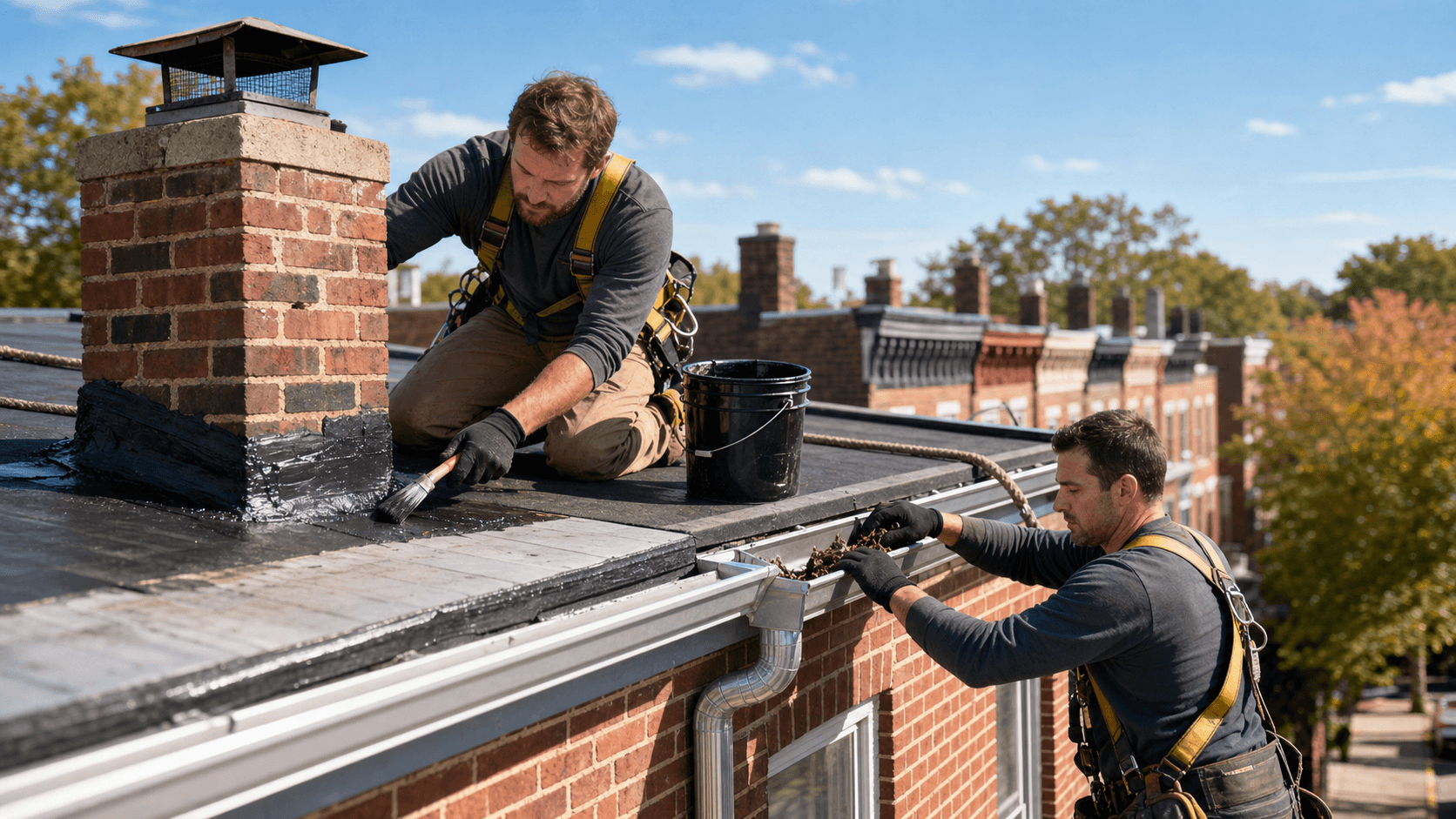
- Have debris cleared from gutters after spring pollen and early summer storms
- Make sure gutters are not sagging or pulling away from the fascia
- Confirm downspouts are open and not crushed or split
- Add or adjust extensions so water is carried away from foundations and party walls
- Check that no one section of gutter is handling the load from several roofs
Keeping water moving away from your home is the first step in keeping your chimney and masonry dry.
Chimney Waterproofing in Pittsburgh Rowhomes
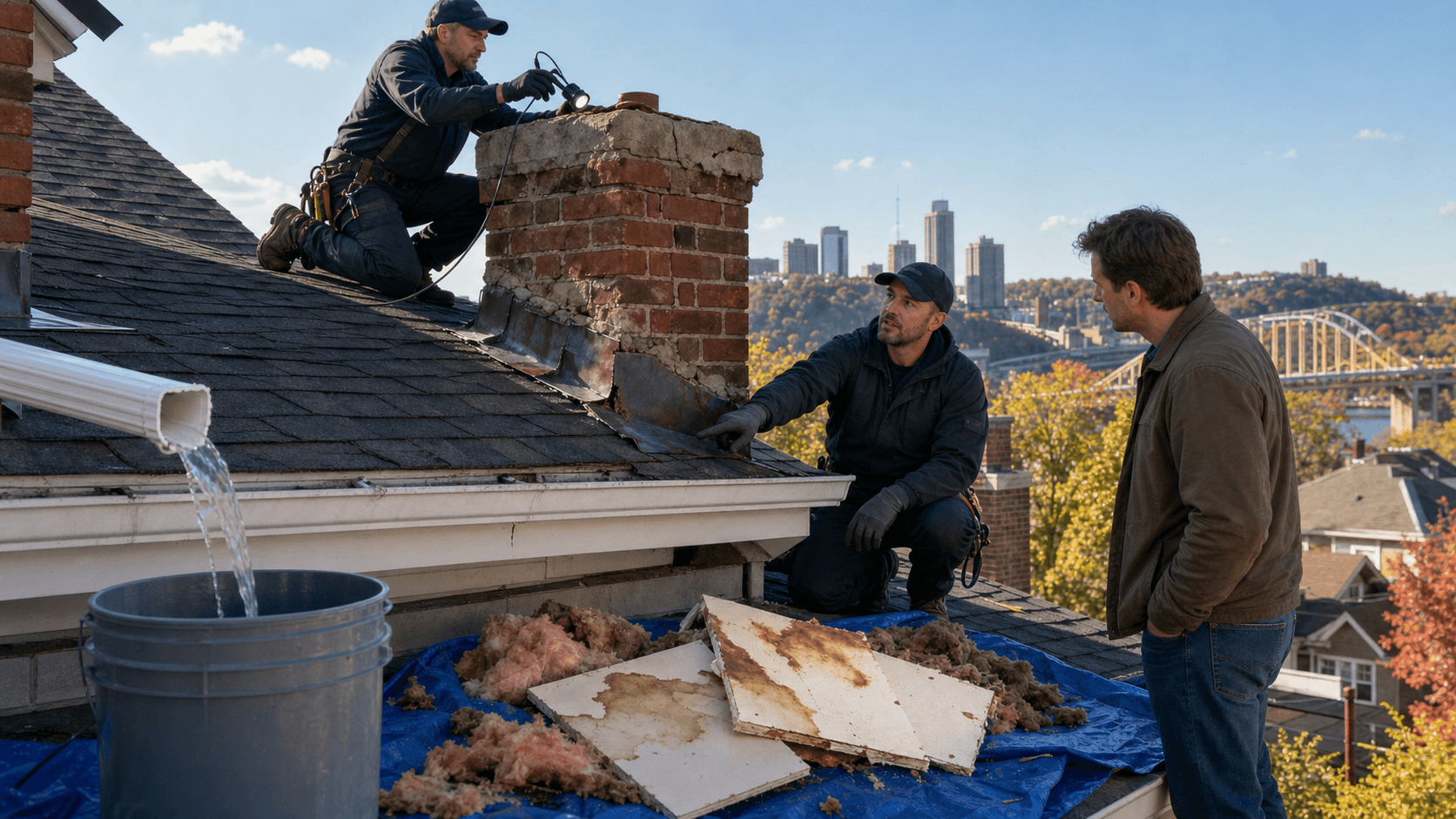
Even if gutters are in good shape, an exposed brick chimney can act like a sponge. Brick and mortar naturally absorb some water. On a Pittsburgh rooftop, with wind-driven rain and temperature swings, that moisture can do real damage over time.
Professional chimney waterproofing in Pittsburgh usually includes:
- Applying a breathable masonry water repellent that helps block liquid water while still letting trapped moisture escape
- Inspecting and repairing the chimney crown, or replacing it if it is cracked or poorly formed
- Checking and improving flashing and counterflashing where the chimney meets the roof
- Sealing key joints where water likes to sneak in
When a chimney is left bare, it soaks up rain. In cold weather, that water freezes and expands inside the brick and mortar. This can cause cracks, loose faces, and crumbling joints. On rowhomes, chimneys often sit right on party walls or near low spots in the roof, so they see even more water.
Flashing and counterflashing are especially important. If flashing is loose, bent, or sealed with the wrong materials, wind-driven rain can work underneath and into the roof deck. Pooling water at the base of a chimney is a strong hint that flashing and drainage need attention.
Common Leak Clues Around Chimneys and Party Walls
Water does not like to stay in one place. It follows gravity, runs along framing, and finds tiny paths through old plaster and drywall. That is why the leak you see is not always right under the problem area on the roof.
Warning signs that often point to gutter or chimney trouble include:
- Brown or yellow stains on ceilings or upper walls, especially near interior walls
- Musty odors in upstairs rooms after a storm
- Peeling paint or soft drywall around chimneys or along party walls
- Efflorescence, a white, chalky powder on interior or exterior brick
- Hairline cracks in plaster that seem to get darker after rain
In rowhomes, water from a chimney or gutter can travel along joists and show up in a hallway, stairwell, or bedroom far from the roofline. Because the structure is shared and tight, it can be hard for a homeowner to trace the true source.
A professional chimney inspection looks beyond the obvious spot. We follow the likely paths of water, check the crown, masonry, and flashing, and look at how drainage from the roof might be feeding the problem. Finding the real entry point early helps prevent bigger repairs later.
Seasonal Timing for Chimney Waterproofing in Pittsburgh
Timing matters for exterior masonry work. Many products need dry surfaces and mild temperatures to bond and cure correctly. In Pittsburgh, late spring and early summer are often the sweet spot.
A simple yearly rhythm can help keep your rowhome dry:
- Late spring, clear gutters and check roof drainage, especially after heavy pollen and early storms
- Early summer, have chimneys and exterior masonry inspected and plan any needed waterproofing
- By early fall, finish major repairs so everything is ready for colder weather and freeze-thaw cycles
Small cracks, weak mortar joints, and aging liners tend to get worse when water gets in and then freezes. Taking care of those issues before winter sets in helps protect both your chimney and your rowhome structure for the long term.
Coordinated care, where gutters, roof drainage, and chimney waterproofing work together, is the best way to keep Pittsburgh rowhomes dry, safe, and efficient through every season.
Protect Your Chimney And Home From Costly Water Damage
If you are starting to see leaks, staining, or crumbling brick, now is the time to schedule professional chimney waterproofing in Pittsburgh. At Chimney Fixers SEO, we carefully assess your chimney and apply proven solutions that help stop moisture before it causes expensive structural problems. Reach out to us today so we can evaluate your chimney's condition and recommend the right repairs. If you are ready to book an inspection or ask questions, simply contact us.