Stop Chimney Leaks Before They Ruin Your Pittsburgh Home
A chimney crown is the concrete or masonry slab that sits across the very top of your chimney. Its job is simple but important: keep rain, snow, and ice from soaking into the bricks and flue below. When the crown fails, water finds every tiny gap and starts working its way into your chimney and your home.
In the Pittsburgh area, our weather is tough on chimney crowns. Heavy rain, long wet spells, and constant freeze-thaw cycles can turn small cracks into big problems. Water gets in, freezes, expands, and those cracks grow. What started as a hairline crack in the crown can end up as a leak in your living room ceiling.
So how do you know if chimney crown repair in Pittsburgh is enough, and when is it smarter to replace the whole crown? Let us walk through signs, options, materials, and how to make the choice that protects your home for the long haul.
How to Tell If Your Chimney Crown Needs Help
You can often spot crown trouble from the ground or with a zoomed-in photo. Common visible signs include:
- Thin, spiderweb-like hairline cracks in the crown surface
- Chips, missing chunks, or crumbling spots near the edges
- Standing or "ponding" water that just sits on top after it rains
- Rust streaks running down from the top, often from water hitting metal parts
- Loose or crumbling mortar joints right below the crown
Trouble does not always show only on the outside. Inside your home, warning signs can be:
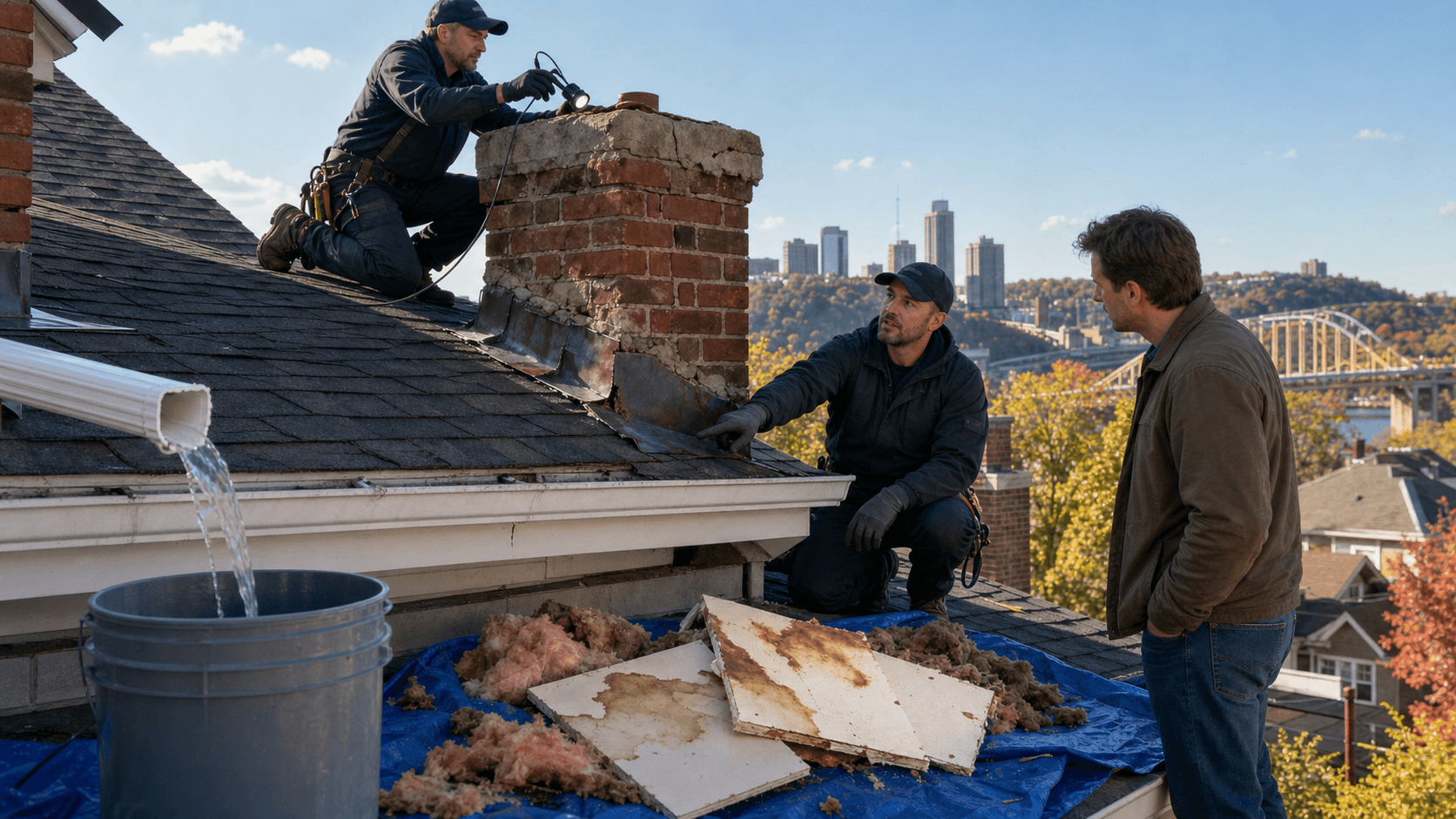
- Brown or yellow stains on ceilings or walls near the chimney
- Musty or damp smells around the fireplace
- Peeling paint or wallpaper in rooms that share the chimney wall
- A damp firebox, even when you have not used the fireplace
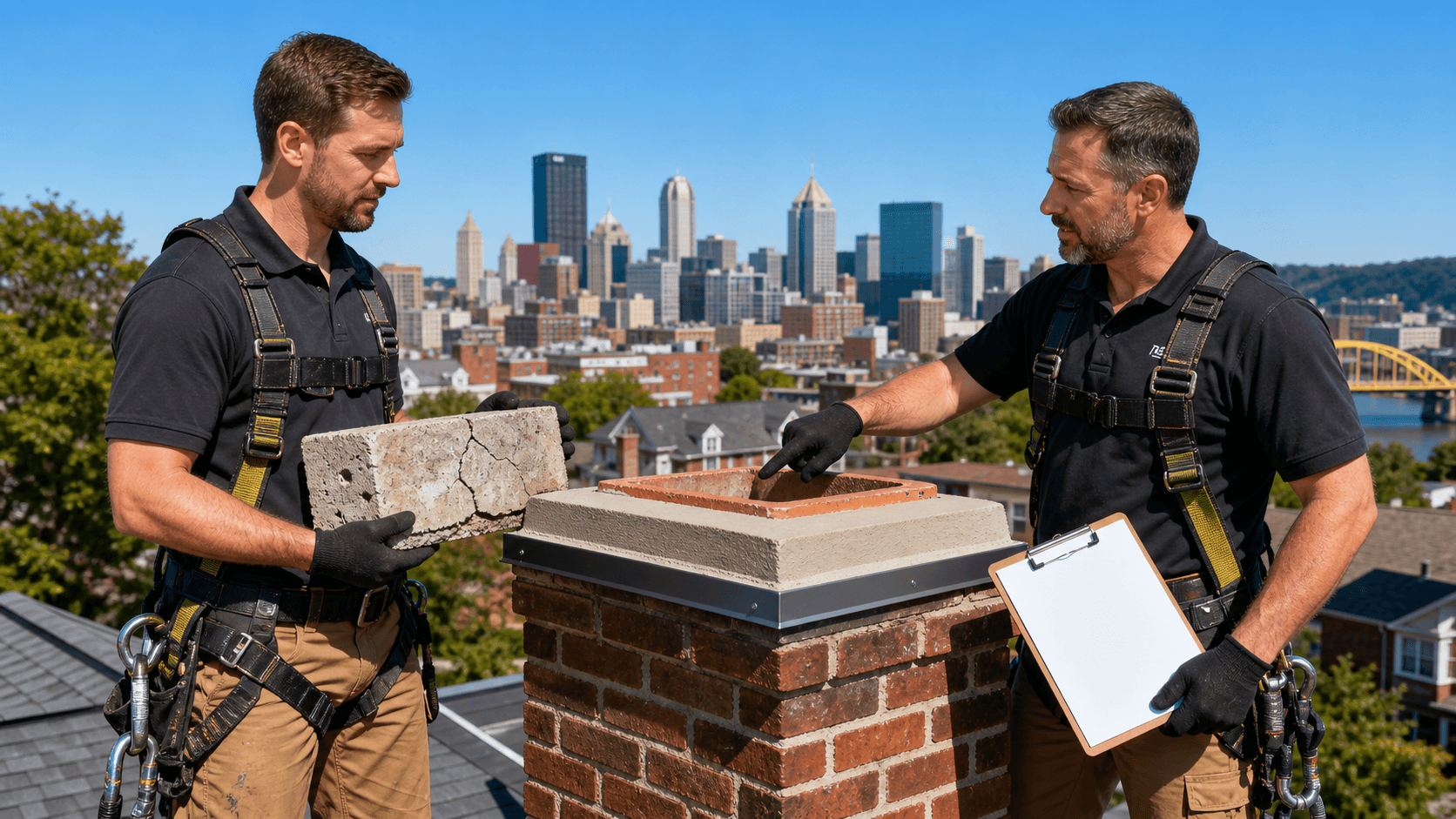
These clues point to moisture getting past the crown and into the structure. What you cannot see is how deep the cracks go or how far the damage has spread. That is where a CSIA-certified chimney inspection matters. A trained tech can tell the difference between light surface wear that can be sealed and deeper structural issues that need more than a quick fix.
When Chimney Crown Repair Is the Right Choice
Not every damaged crown needs to be torn off and rebuilt. In many cases, chimney crown repair in Pittsburgh is a smart and practical choice. Repair usually makes sense when:
- Cracks are shallow and mostly on the surface
- There is minor flaking or spalling, but the crown still feels solid
- The concrete is a bit porous but not crumbling apart
- The crown has a decent shape and slope, just needs sealing and touch-ups
In these cases, a qualified chimney professional can:
- Clean the crown, then fill small cracks with flexible fillers
- Apply an elastomeric or other flexible waterproof coating across the surface
- Adjust or re-shape low areas so water runs off instead of pooling
These coatings are made to stretch slightly as the crown heats and cools. That flexibility is very helpful in Pittsburgh, where temperatures swing and water freezes and thaws. When repairs are done before serious winter weather, they can stop moisture before it has the chance to get into those cracks and push them wider.
Repair offers some nice benefits:
- Lower upfront cost compared to full rebuild work
- Quicker process, often with less disruption to your day
- Extends the life of an otherwise decent crown
- Buys time before a future replacement is needed
The key is timing. The earlier you catch and repair issues, the more likely it is that a simple repair will do the job safely.
When a Full Chimney Crown Replacement Makes Sense
Sometimes repair is like putting a bandage on a broken bone. If the crown is too far gone, full replacement is the safer and more cost-effective path over time. Replacement is often needed when:
- Cracks are deep, wide, or run all the way across the crown
- Pieces are broken off or missing, leaving gaps for water
- The original "crown" is just a thin mortar wash or flat slab with no overhang
- You have repeated leak issues even after earlier repairs
In these cases, the old crown is usually removed so a new one can be built correctly from the start. A well-built crown often includes:
- Masonry-grade concrete, not basic mortar, for strength and durability
- Rebar or other reinforcement for larger chimneys
- A proper slope so water runs away from the flue and edges
- An overhang with a drip edge to throw water past the brickwork below
Modern construction methods do a much better job at handling water than older, flat mortar tops. In Pittsburgh's wet climate, that proper slope and drip edge can be the difference between a dry chimney and one that slowly soaks up water for years.
While full replacement has a higher initial cost than simple repair, it can:
- Cut down on future leak calls and patch jobs
- Help prevent interior damage like stained ceilings or warped framing
- Protect the chimney structure from long-term water and freeze-thaw damage
When done correctly, a new crown is built to last for many years, which often makes it the better value for a badly damaged top.
Materials and Methods Pittsburgh Homeowners Should Know
The success of any crown project comes down to the right materials and the right design. Common materials used in quality repair and replacement include:
- Masonry-grade concrete for new crowns
- Specialized crown sealants made to flex and shed water
- Stainless or copper drip edges to help guide water away from brickwork
- High-quality crack fillers that stay flexible in changing weather
Quick fixes like cheap caulk or a thin smear of mortar across the top usually do not last. They tend to crack, peel, or pull away from the concrete, which lets water right back in.
Design details matter too. A good crown should have:
- A noticeable slope so water flows off, not toward the flue
- Enough overhang to keep water from running straight down the chimney sides
- A drip edge that breaks the water line and keeps it from clinging to the brick
These features work together to protect against Pittsburgh's frequent rain and melting snow that can refreeze overnight.
Skilled, CSIA-certified workmanship is also key. Crown work ties into:
- Chimney caps and how they fit into or over the crown
- Chimney liners and clearance around the flue opening
- Local building codes and safety practices while working at height
When all these pieces are planned as one system, your chimney is better prepared to handle our local weather without leaking.
Get Your Chimney Crown Winter-Ready with Chimney Fixers
The best time to think about your chimney crown is before you see stains on your ceiling or smell damp soot in your living room. An early-season inspection gives you time to handle repairs or replacement before cold, wet weather makes things worse or limits when work can be done safely.
At Chimney Fixers, we inspect, sweep, and repair chimneys throughout the greater Pittsburgh area. For chimney crown repair in Pittsburgh, we look at the whole picture, from surface cracks to deeper structural signs. We often provide photo documentation, clear written findings, and side-by-side options when both repair and replacement could work. That way, you can weigh short-term needs against long-term protection and choose what makes the most sense for your home and budget.
Get Started With Your Project Today
If you are seeing cracks, leaks, or deterioration at the top of your chimney, now is the time to schedule professional chimney crown repair in Pittsburgh. At Chimney Fixers SEO, we carefully assess the extent of the damage and recommend solutions that protect your home and help prevent future costly repairs. Reach out today and let our team restore your chimney's safety and performance, or contact us to request a convenient appointment.