Stop Winter From Destroying Your Pittsburgh Chimney
Freeze-thaw weather is tough on chimneys in Pittsburgh. Water from snow, sleet, and rain seeps into tiny openings in your brick and mortar. When temperatures drop, that water freezes, expands, and slowly forces the masonry apart. This cycle repeats many times each cold season.
Most of the damage starts small and out of sight. Hairline cracks in the chimney crown, tiny gaps in the flashing, and porous brick can quietly take on water year-after-year. By the time you see major problems, you may already be looking at serious repairs.
We like to focus on prevention. A simple maintenance plan that includes flashing checks, crown repair, and smart chimney waterproofing in Pittsburgh can stop freeze-thaw damage early. With the right steps at the right time, you help protect your chimney before it turns into a big headache.
How Freeze-Thaw Weather Wrecks Brick and Mortar
Brick and mortar look solid, but they are full of tiny pores. Water works its way into those pores during rain, snow, and wet, slushy days. When the temperature drops below freezing, the water turns to ice and expands, putting pressure on the masonry from the inside.
In Pittsburgh, we get a lot of temperature swings. Late-fall, winter, and early spring often bounce above and below freezing, sometimes in the same day. Add in moisture from storms and melting snow, and your chimney can see dozens of freeze-thaw cycles in a season. That speeds up wear and tear on your brickwork.
Here are some early warning signs that your chimney may be feeling the strain:
- Spalling, flaking, or peeling brick surfaces
- Hairline cracks in the crown at the very top of the chimney
- Gaps or crumbling in mortar joints between bricks
- Rust streaks on the damper or firebox area
- Water spots or staining on ceilings or walls close to the chimney
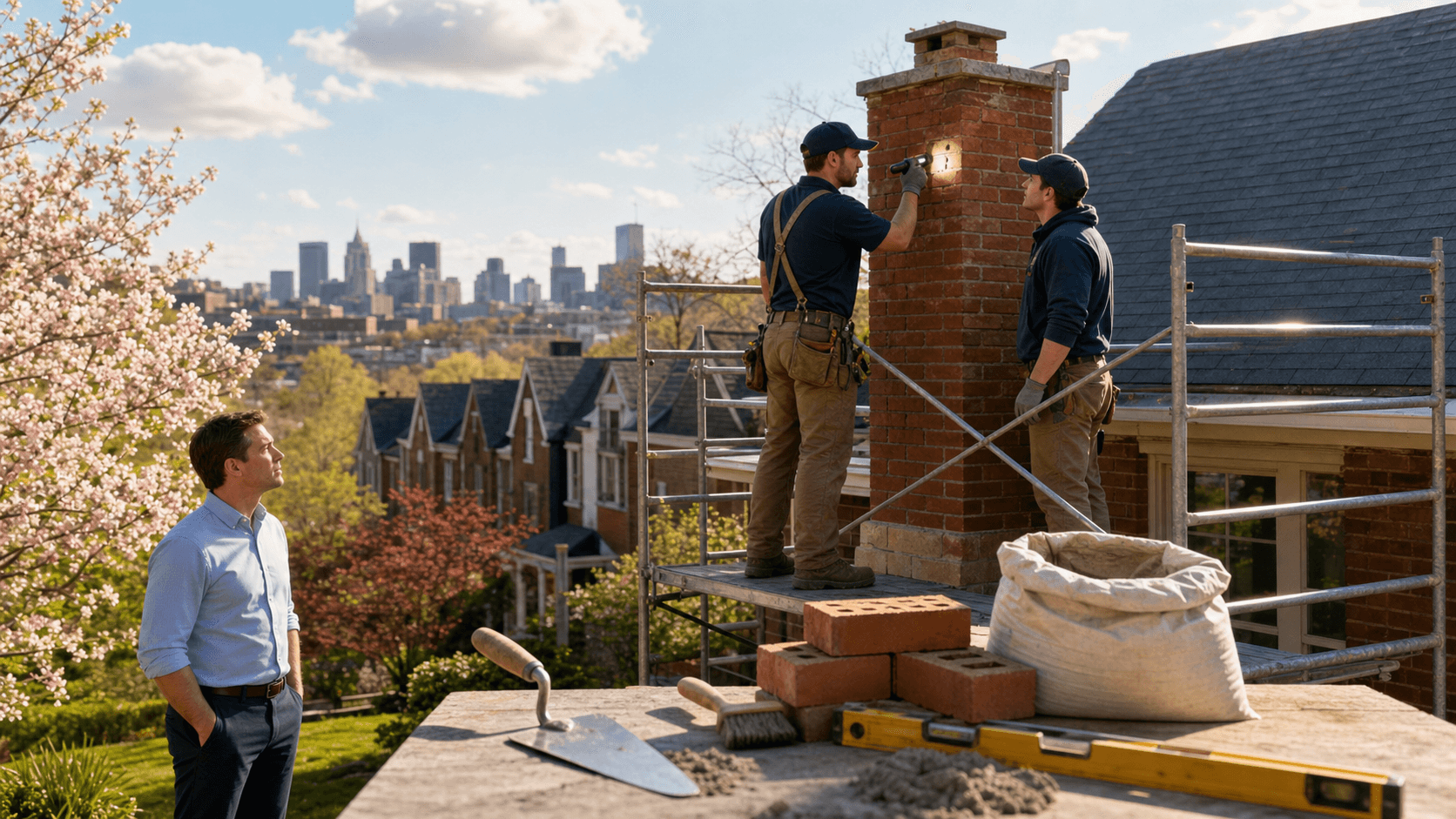
When you notice these signs, it is time for a closer look from a trained chimney pro. Catching problems early can keep the structure safer and reduce the risk of bigger issues later.
Protecting the Chimney Crown From Cracks and Leaks
The chimney crown is the top surface that covers the masonry around the flue. It is usually made from concrete or mortar and should slope away from the flue so water sheds off the sides. Think of it as the roof for your chimney, helping keep water out of the bricks below.
Crowns often start to fail in small ways. Common causes include age, poor original mix or design, shifting of the chimney, and old do-it-yourself attempts with basic caulk or patching cement. Once tiny cracks appear, water moves in. Freeze-thaw cycles then make those cracks wider and deeper, turning minor flaws into real leak paths.
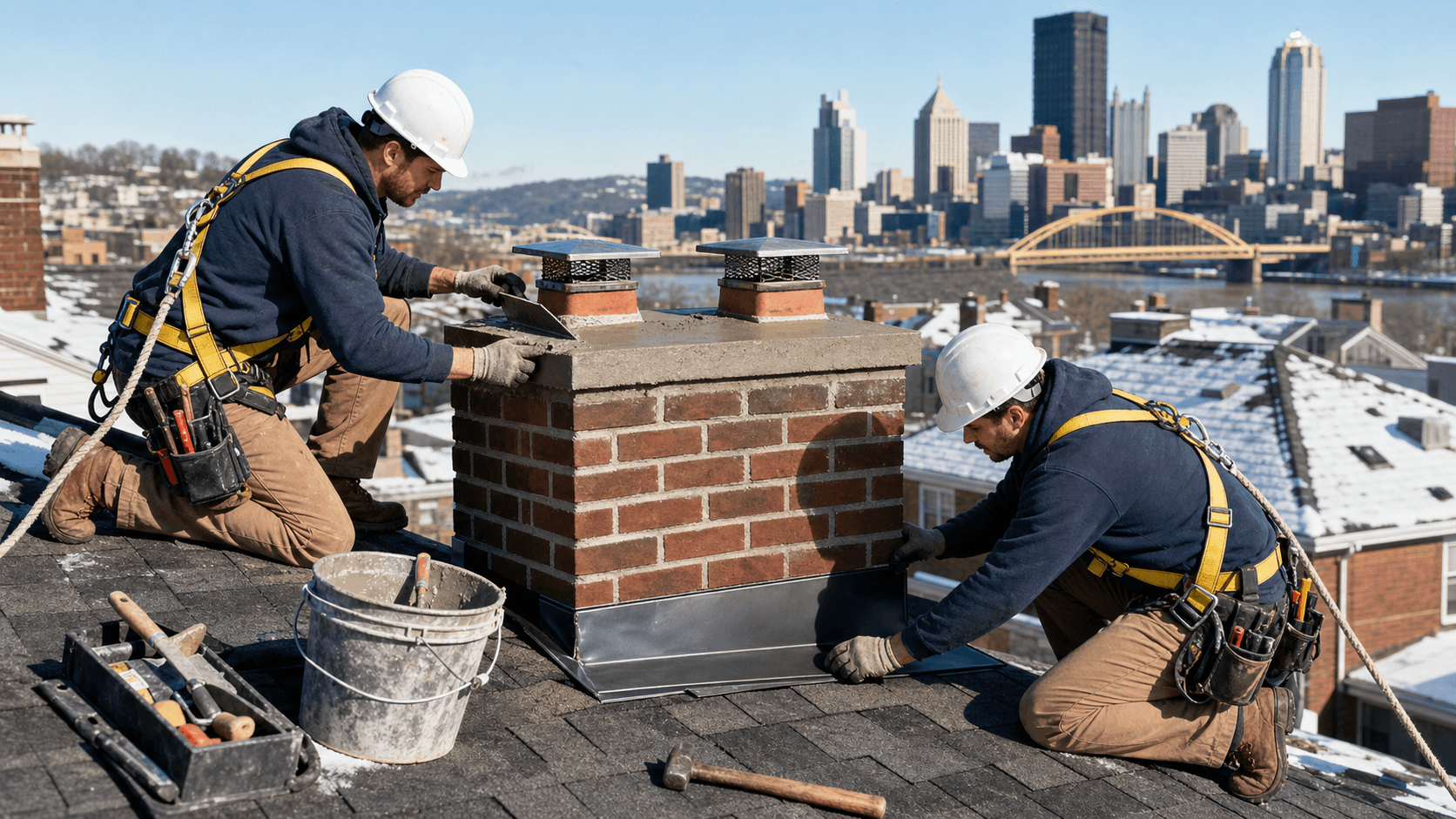
Professional chimney crown services usually include options like:
- Crown resurfacing using flexible, elastomeric coatings that can bridge small cracks and move with temperature changes
- Full crown rebuilding when the original crown is badly cracked, thin, or falling apart
- Adding a properly sized chimney cap to keep direct rain and snow from pounding on the crown and flue
The right approach depends on the current condition of the crown. A careful inspection helps decide if it can be restored or if it should be replaced for long-term protection.
Flashing Repairs That Stop Roofline Water Intrusion
Flashing is the metal system that seals the gap where your chimney passes through the roof. There are usually two parts: step flashing that tucks under the shingles and climbs up the chimney side, and counterflashing that is set into the brick and covers the top of the step flashing. When both work together, they form a tight, water-shedding barrier.
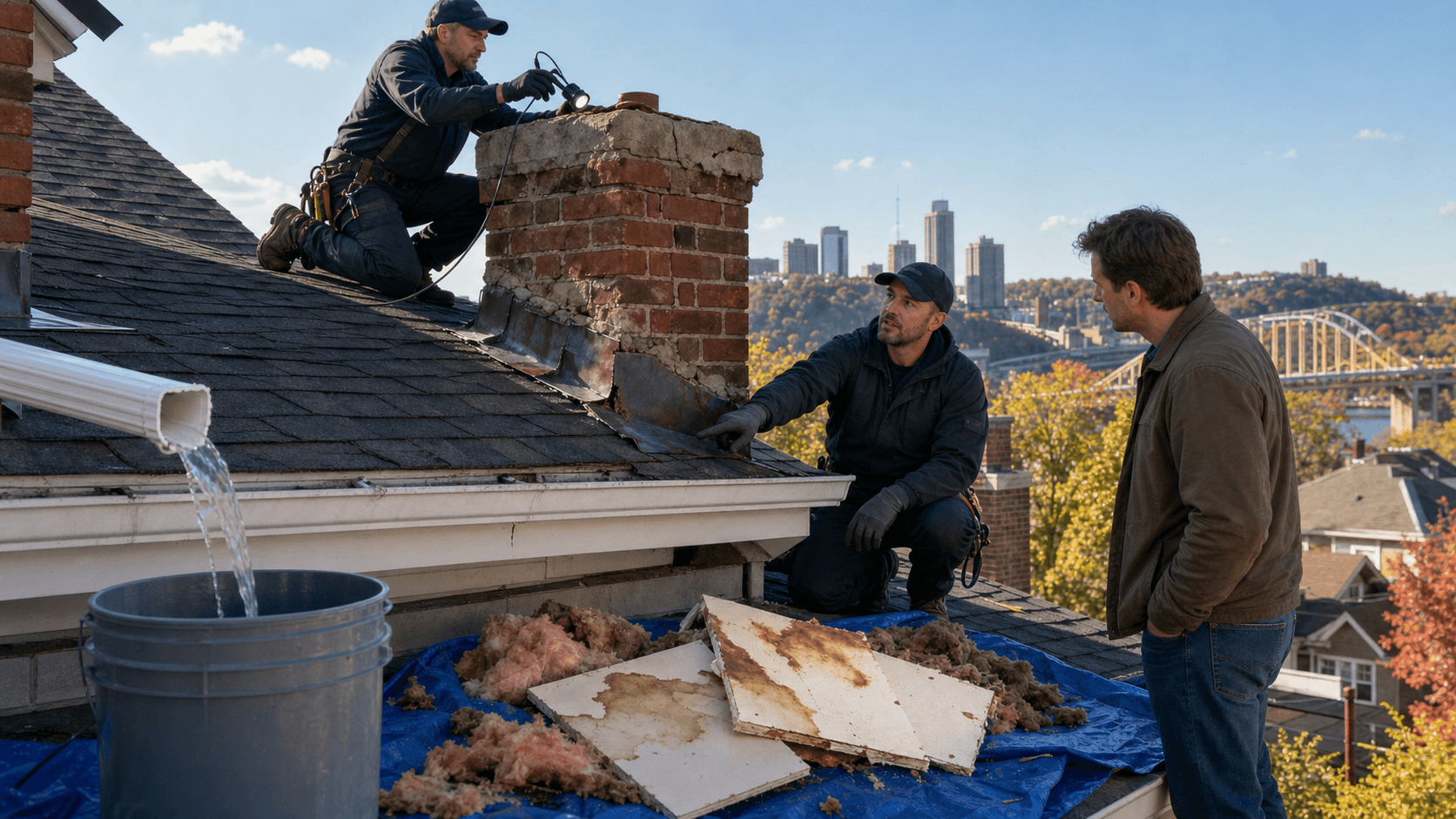
This area takes a beating in heavy rain and when snow sits on the roof and melts. Common flashing issues include:
- Rusted or corroded metal
- Dried-out or cracked sealant at the edges
- Flashing that has pulled away as the house or chimney settled
- Old flashing that was roofed over instead of being replaced correctly
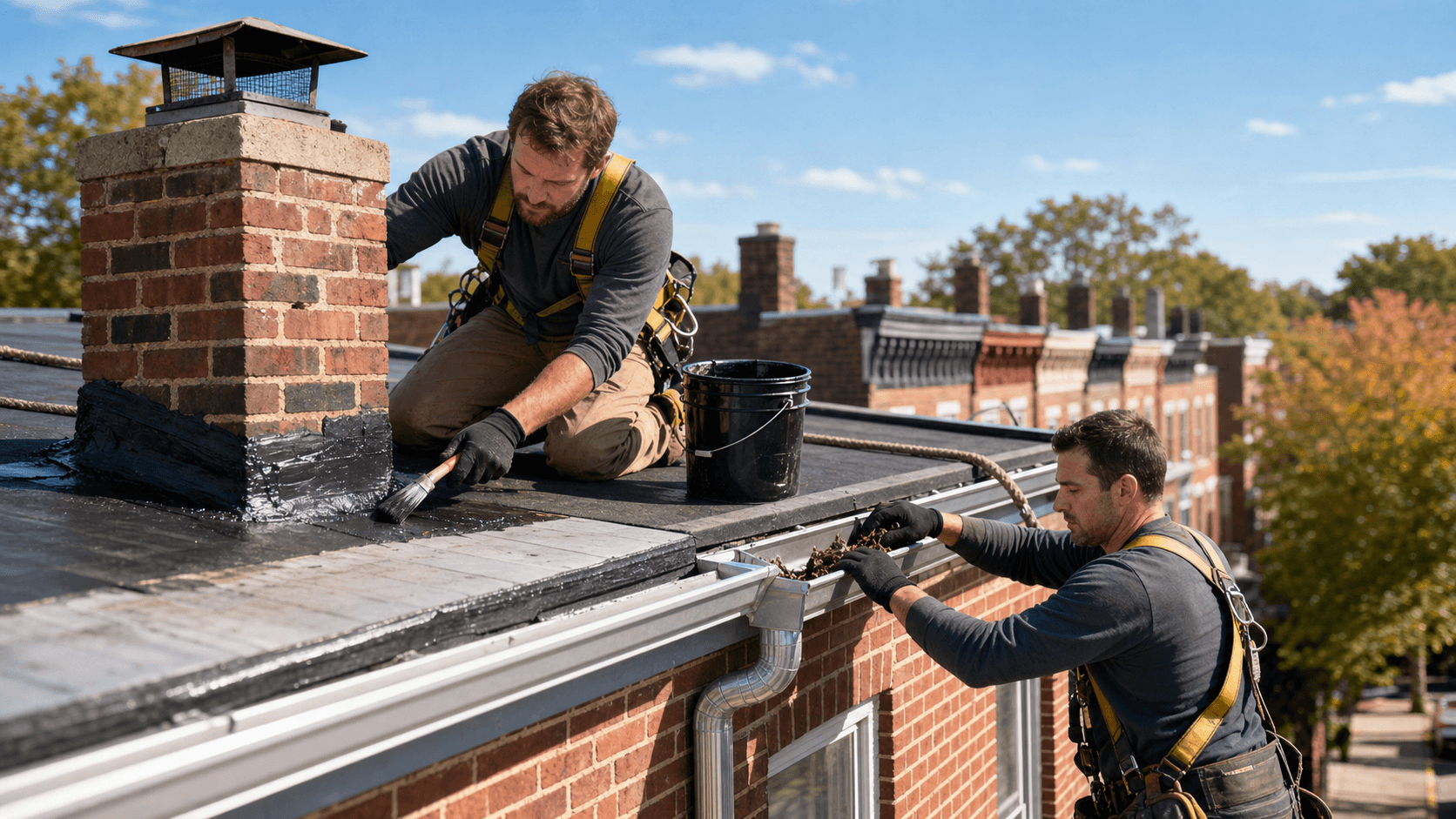
Proper flashing repair is more than just adding more sealant. A good repair usually includes:
- A full inspection of all sides of the chimney at the roofline
- Removing damaged or poorly installed metal
- Installing new step and counterflashing that ties in correctly with the shingles
- Sealing joints so they stay watertight through temperature swings and future storms
When flashing is sound, it goes a long way toward keeping water out of both the chimney structure and the home interior.
Smart Chimney Waterproofing in Pittsburgh Homes
Many people think any sealer or even paint will protect a chimney. The problem is that thick, non-breathable coatings can trap moisture inside the brick. In a freeze-thaw climate like Pittsburgh, trapped water inside the masonry can actually speed up cracking and spalling.
Professional-grade waterproofing products for chimneys are different. They are designed to be vapor-permeable. That means they block liquid water from soaking in, but still let water vapor escape from the inside. The brick can dry out while being shielded from new moisture.
Chimney waterproofing in Pittsburgh works best when it is part of a bigger plan:
- Repoint or repair loose and missing mortar joints
- Fix cracks or damage in the crown
- Repair or replace flashing at the roofline
- Then apply the right breathable water repellent to the exterior masonry
When the whole system is sound, the sealer has a solid base to work with. Long-term, this can help with:
- Less flaking and spalling brick
- Fewer large masonry repairs down the road
- Drier interior walls and ceilings near the chimney
- A longer working life for the entire chimney structure
Reapplication is usually needed every so often, depending on weather exposure and product type, so it pays to keep good notes.
Seasonal Maintenance Plan to Beat Freeze-Thaw Damage
A simple yearly routine can keep your chimney ahead of Pittsburgh's rough weather. Timing matters because you want repairs and waterproofing done in good conditions so they cure correctly.
A basic plan often looks like this:
- Late spring or early summer: full chimney inspection after the stress of winter
- Warm-weather months: complete any needed repairs, crown work, flashing fixes, and waterproofing
- Early fall: a quick visual check before you start using your fireplace or heating system more often
Homeowners can safely keep an eye on a few things from the ground or from inside:
- New cracks in the crown that you can see from the yard
- Stains on ceilings or walls near the chimney path
- Pieces of brick or mortar on the roof or around the home
- Rust, odor, or damp spots in the firebox area
Anything that looks off is a signal to bring in a CSIA-certified chimney professional with the proper ladders, safety gear, and tools. Pros can inspect the full height of the chimney, check the flashing up close, test the crown, and look inside the flue system.
Keeping a simple record helps too. Note:
- Dates of inspections
- Photos of the chimney from the same angle each year
- What repairs were done and when
- When waterproofing products were applied
These small steps make it easy to spot changes over time and handle small issues before they grow. That is the best way to keep your chimney safe, dry, and ready for whatever Pittsburgh weather sends its way.
Protect Your Chimney and Home From Costly Water Damage Today
If you are noticing leaks, staining, or crumbling masonry, now is the time to schedule professional chimney waterproofing in Pittsburgh with Chimney Fixers SEO. We carefully assess your chimney, explain your options in clear terms, and complete the work with materials designed to stand up to Pittsburgh's weather. Reach out today through our contact page so we can help you prevent future damage and protect your home.