Stop Hidden Water Damage Before It Wrecks Your Home
A small chimney leak rarely looks serious at first. It might show up as a faint stain on the ceiling, a little peeling paint above the fireplace, or a few crumbly bricks outside. But once water finds a path through your chimney, it can lead to rot, mold, rusted metal, and expensive structural repairs that spread far beyond the fireplace.
In the Pittsburgh area, chimneys take a beating from heavy rains, lake-effect-style snow, and constant freeze-thaw cycles. All that moisture and temperature swing makes chimney leaks especially common, especially on older homes. Our goal in this article is to help you spot the early warning signs that you need professional chimney leak repair in Pittsburgh, so you can stop damage before it spreads.
At Chimney Fixers, we are a local, family-owned company that focuses on safety and long-lasting chimney solutions, not quick patches that wash away with the next storm. When you know what to look for, you can catch problems sooner and protect your home, your roof, and your fireplace system.
How Pittsburgh Weather Beats Up Your Chimney
Pittsburgh weather is tough on brick and mortar. When temperatures swing above and below freezing, water that has soaked into your chimney materials expands as it freezes, then contracts as it thaws. Over time, that movement causes bricks to crack, faces to pop off, and mortar joints to open up. Those openings become pathways that pull more water inside.
Wind-driven rain is another big factor. On stormy days, rain can hit the chimney from the side and work its way into tiny gaps in the masonry, crown, or flashing. Snow that piles up around the chimney and ice dams that form near the roofline hold moisture against bricks and metal for long periods, which speeds up wear and rust.
Many Pittsburgh homes have older masonry, steeper roofs, and sometimes shared chimneys between units. Leaks can travel along framing, behind walls, or under roof coverings before they finally show up as an inside stain. By the time you notice a symptom indoors, water may have been working on your chimney and roof structure for quite a while. Understanding how hard our local weather is on chimneys makes it easier to tell when yours is no longer keeping water out the way it should.
Visible Exterior Clues Your Chimney Is Leaking
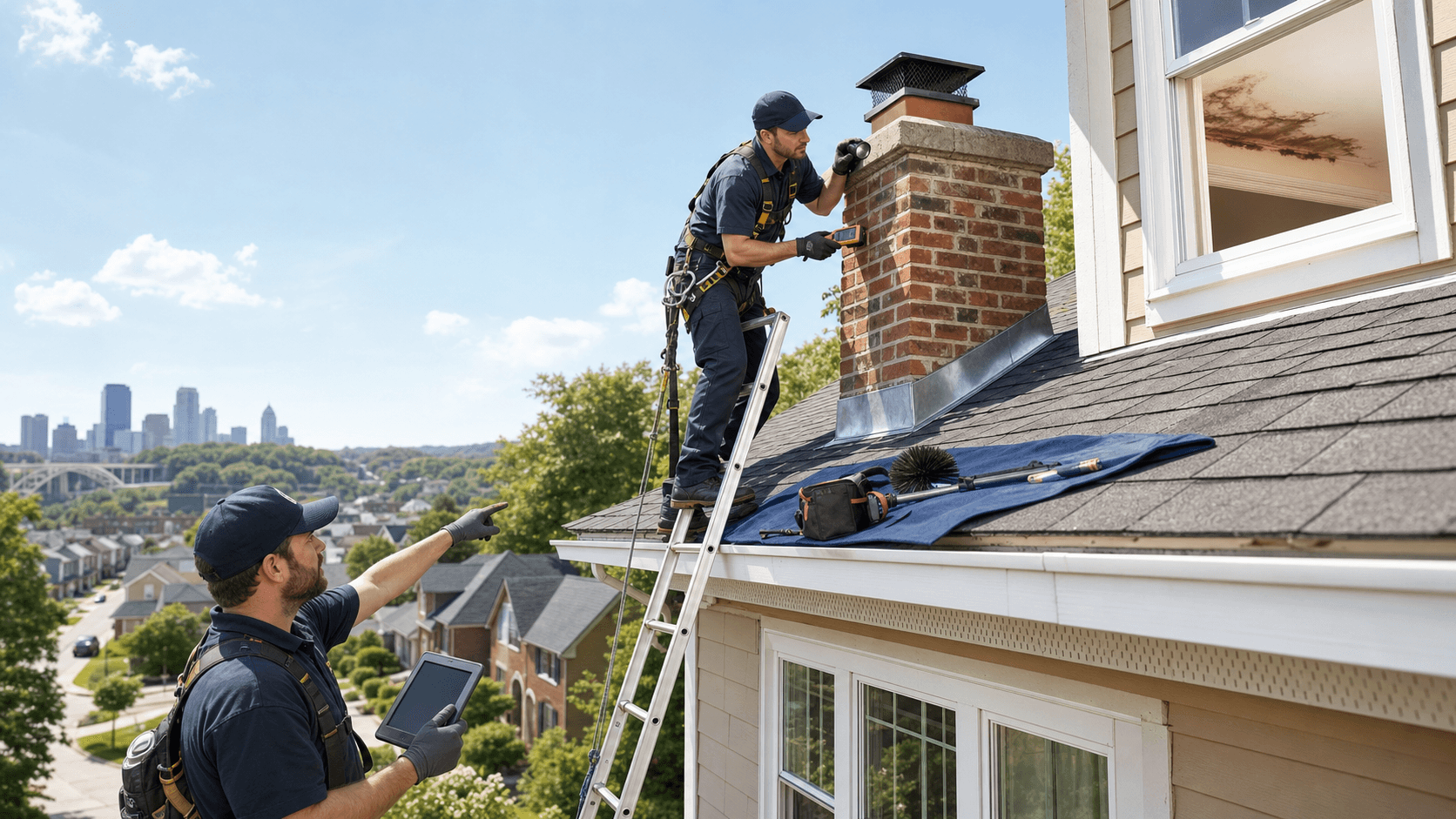
The outside of your chimney often tells the story first. When we inspect chimneys, we look closely at the masonry for signs that water is getting in. Red flags include:
- Crumbling or recessed mortar joints
- Missing, loose, or cracked bricks
- Flaking or spalling brick faces where the surface has popped off
- Moss, algae, or plant growth on the brick or mortar
The top of the chimney is especially vulnerable. A cracked or deteriorated concrete or mortar crown lets water seep directly into the chimney structure. Gaps or movement around the chimney cap, missing hardware, or rust stains on caps and chase covers suggest that water is finding its way inside.
At the roofline, the metal flashing that ties the chimney into the shingles is a common leak point. Warning signs include:
- Lifted, bent, or rusted flashing where the chimney meets the roof
- Missing or curled shingles right beside the chimney
- Water stains or streaks on exterior siding, fascia, or soffits near the chimney
If you notice any of these visual clues, water is already getting past your chimney's defenses. That is the stage where a professional inspection should not be delayed, because early repair is usually far less invasive than waiting until materials are saturated and failing.
Interior Warning Signs Around Fireplaces and Attics
Sometimes the first place you see trouble is inside the house. Brown or yellow stains on ceilings or walls near the chimney are classic signs that moisture is coming through from the outside. Paint that peels, cracks, or bubbles above the fireplace opening or along the chimney chase often points to a slow leak behind the surface. You might also notice damp spots or swelling on mantels, trim, or built-in shelves next to the fireplace.
Odors can be another early warning. A musty smell coming from the firebox, especially in damp weather, suggests moisture and potential mold growth in or around the chimney. Persistent smoky odors when the fireplace is not in use can also signal that water has mixed with soot and is lingering in the system. Visible mold, dark spots, or fuzzy growth on walls or ceilings near the chimney chase should always be taken seriously.
Do not forget to check less visible spaces. In attics, utility rooms, or closet chases near the chimney:
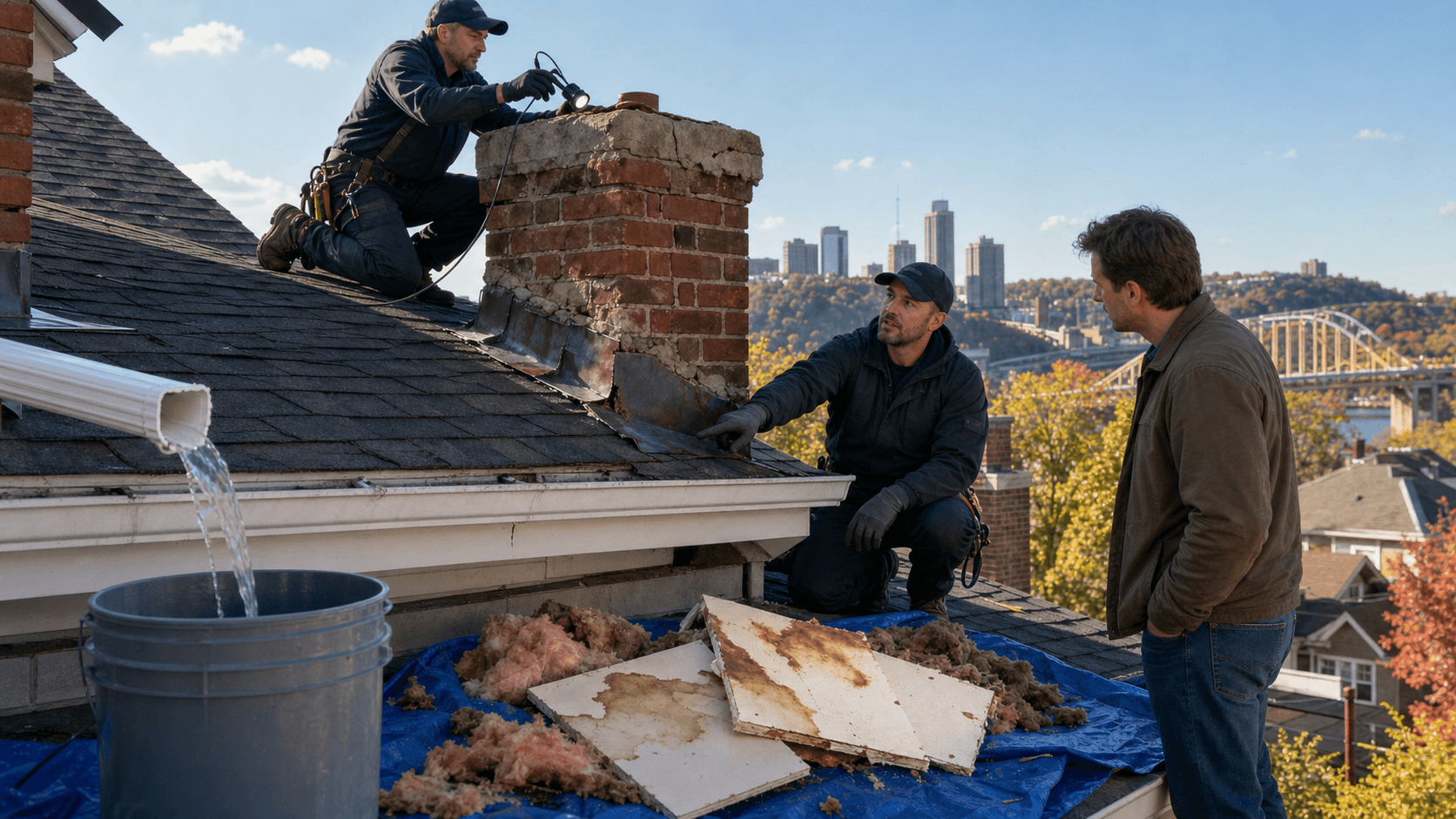
- Damp or matted insulation around the chimney
- Darkened, stained, or soft roof sheathing or rafters
- Rusted metal components touching the chimney or flue
By the time interior symptoms show up, leaks have often been active for quite a while. That makes professional chimney leak repair in Pittsburgh more urgent, because long-term moisture can weaken framing, damage wiring, and create conditions where mold spreads quickly.
Chimney Components Most Likely to Leak First
Not every part of the chimney is equally vulnerable. Some components almost always fail first when exposed to repeated water and freeze-thaw cycles.
The chimney crown is one of the top suspects. Hairline cracks, missing pieces, or poor original construction allow water to soak straight into the top of the chimney. Bricks and mortar joints just below the crown are next in line, especially when the original mortar has aged or there have been small patch jobs over the years.
Flashing is another key leak source. If it was never installed correctly, has pulled away from the brick, or was coated with generic roof tar as a "fix," it often leaks again. Chimney caps that are loose, undersized, or missing screens can let rain pour directly into the flue and smoke chamber.
Even the flue liner itself can contribute. Cracked tiles or gaps at the liner joints allow moisture mixed with flue gases to escape into the chimney walls. Past repairs with non-breathable sealants, thick paint-on products, or roofing materials not meant for chimneys can trap water instead of shedding it, which quietly creates new leak points.
Tracing a leak to its true source often requires a trained eye. Water rarely drips straight down from the entry point, so guessing and treating the symptom, not the cause, can waste time and money.
Why Professional Leak Repair Beats DIY Patches
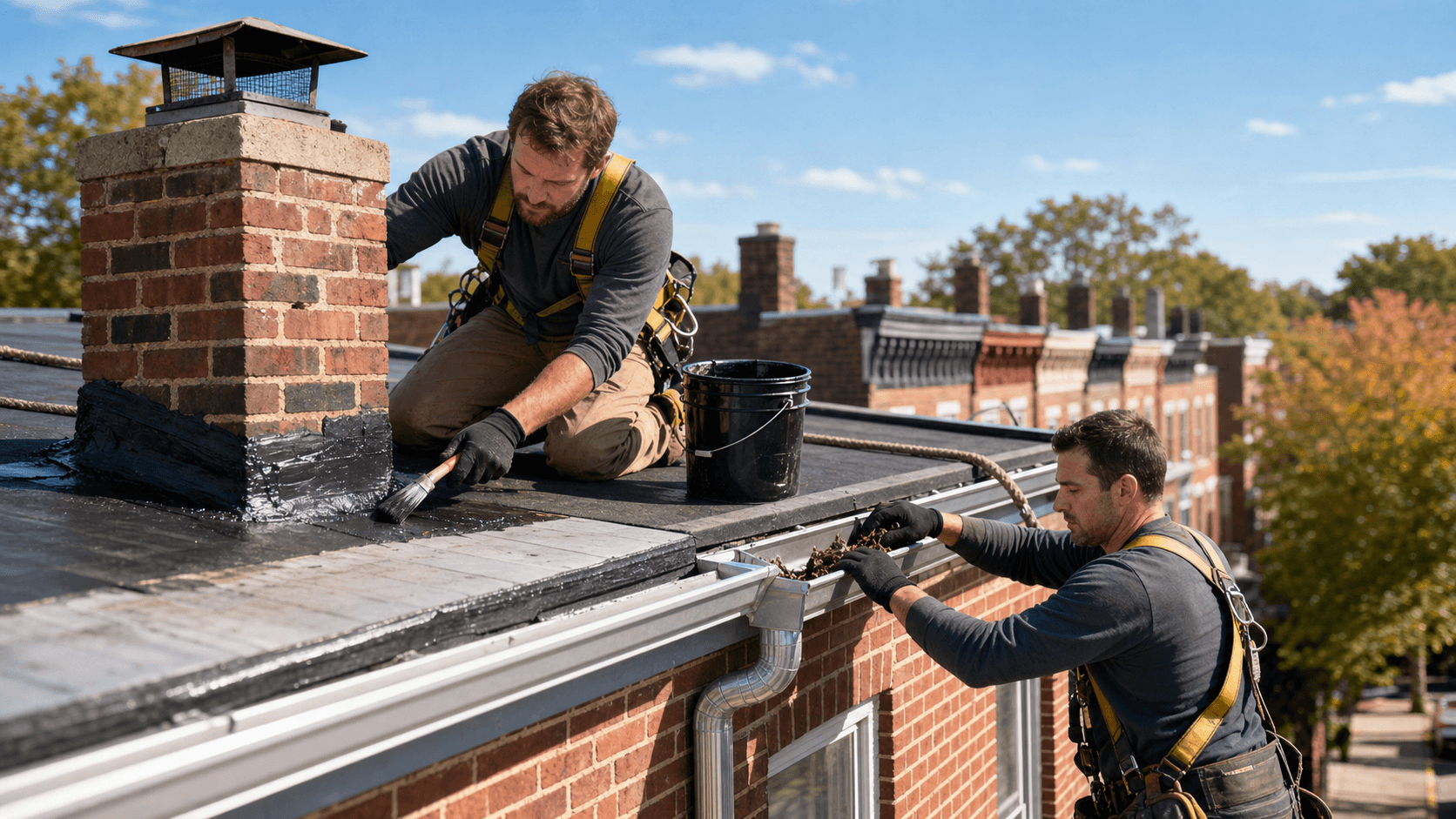
When a ceiling spot appears, it is tempting to climb up with a tube of caulk or a bucket of roof tar. The problem is that many DIY fixes only mask symptoms and can even make the situation worse. Caulk smeared over cracked mortar, tar slapped on flashing, or paint-on sealers applied to bricks often fail after a season of Pittsburgh weather. Some sealers can trap moisture inside the masonry, speeding up spalling and freeze damage.
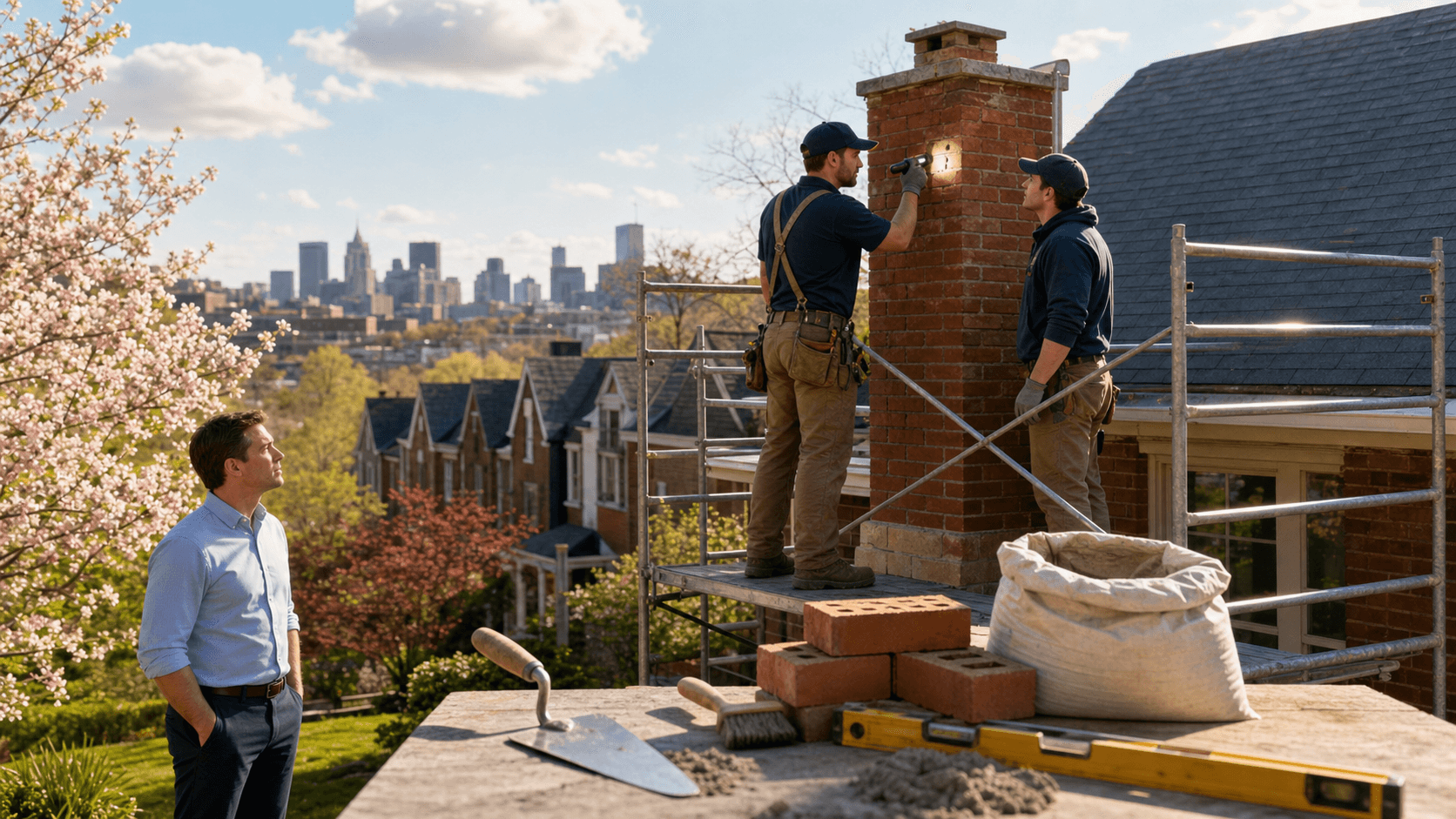
Professional chimney leak repair looks very different. Instead of covering damage, we remove failed materials and repair them correctly. That might mean tuckpointing with compatible mortar, rebuilding or resurfacing a crown, installing proper step and counter flashing, or adding a correctly sized chimney cap or cover. The goal is to restore the system so it sheds water the way it was meant to, not just to stop one visible drip.
A full chimney inspection can also reveal issues you cannot safely or easily see, like cracked flue liners, hidden rust in the smoke chamber, or loose bricks near the roofline. These hidden issues matter for both safety and code compliance, because moisture and heat together can weaken structural components and increase fire or carbon monoxide risks.
Local experience with Pittsburgh's climate, paired with professional training and certification, helps us match repairs to what chimneys here actually go through year after year. That kind of informed approach is hard to match with a ladder, a hardware store run, and guesswork.
Protect Your Home with a Local Chimney Leak Expert
When you step back and look at the signs together, a pattern starts to form. Exterior chimney damage, like spalling brick, missing mortar, cracked crowns, and lifted flashing, often shows up first. Interior stains, peeling paint, musty odors, and attic moisture tell you that water has already made its way inside your home. Wear on caps, crowns, and flashing usually confirms that the chimney is no longer keeping water out the way it should.
Waiting to address these symptoms rarely saves money. Small leaks give mold time to grow, allow rot to spread through roof framing, and slowly erode masonry from the inside out. Catching problems early with professional chimney leak repair in Pittsburgh helps protect both the structure of your home and the safe operation of your fireplace or heating appliance, no matter what the next storm brings.
Get Started With Your Project Today
If you are seeing water stains, crumbling brick, or musty odors around your fireplace, now is the time to schedule professional chimney leak repair in Pittsburgh. At Chimney Fixers SEO, we carefully inspect your chimney, pinpoint the source of the leak, and fix it before it causes more costly damage. Reach out today and let us explain your options, answer your questions, and provide a clear plan of action. You can also contact us to book an appointment that fits your schedule.