Stop Chimney Leaks Before They Soak Your Brick Home
Chimney leaks in older Pittsburgh brick homes do not stay small for long. A little drip at the chimney can turn into stained ceilings, peeling paint, musty smells, and damaged brick before you know it. With four true seasons, plenty of rain, and long winters, our local homes take a beating from water.
Many homeowners are told they have a roof leak when the real problem starts at the chimney. New shingles or more caulk around the flashing will not fix a cracked crown or failing mortar. That is why it helps to understand what chimney leak repair in Pittsburgh actually looks like, especially in older brick houses.
In this article, we will walk through why older chimneys leak, how a CSIA-certified sweep tracks down the real source, what repairs usually involve, and why timing those repairs before fall and winter can save money and stress.
Why Older Pittsburgh Brick Chimneys Are Prone to Leaks
A lot of chimneys in neighborhoods like Shadyside, Squirrel Hill, Lawrenceville, and other parts of Pittsburgh were built many decades ago. They were never meant to last forever without care.
Here is what age and construction do to them over time:
- Soft, older brick starts to absorb more water as it wears
- Historic mortar joints crack, crumble, or fall out
- Original construction often lacks modern flashing and moisture barriers
When these older materials break down, water has a much easier path into your home. The chimney might look solid from the ground, but small gaps and hairline cracks can carry a lot of moisture.
Our local weather also plays a big part. The constant freeze-thaw cycles in Pittsburgh push water into tiny cracks. When that water freezes, it expands and makes the cracks bigger. This leads to:
- Spalling brick, where the surface flakes or pops off
- Crumbling mortar between bricks
- Larger gaps that pull in even more water during storms
On top of that, chimneys sit up high, out in the open. Wind-driven rain hits them harder than most other parts of your house. Even a short storm can soak the brick, crown, and flashing.
Common weak spots include:
- Cracked or poorly built crowns at the very top
- Missing or damaged chimney caps
- Mortar joints that have worn away over the years
- Flashing at the roofline that has pulled loose or was never installed correctly
What shows up inside as a small yellow stain on a ceiling might be the end result of water traveling down through the chimney structure from several different points.
How Pros Diagnose Chimney Leaks in Brick Homes
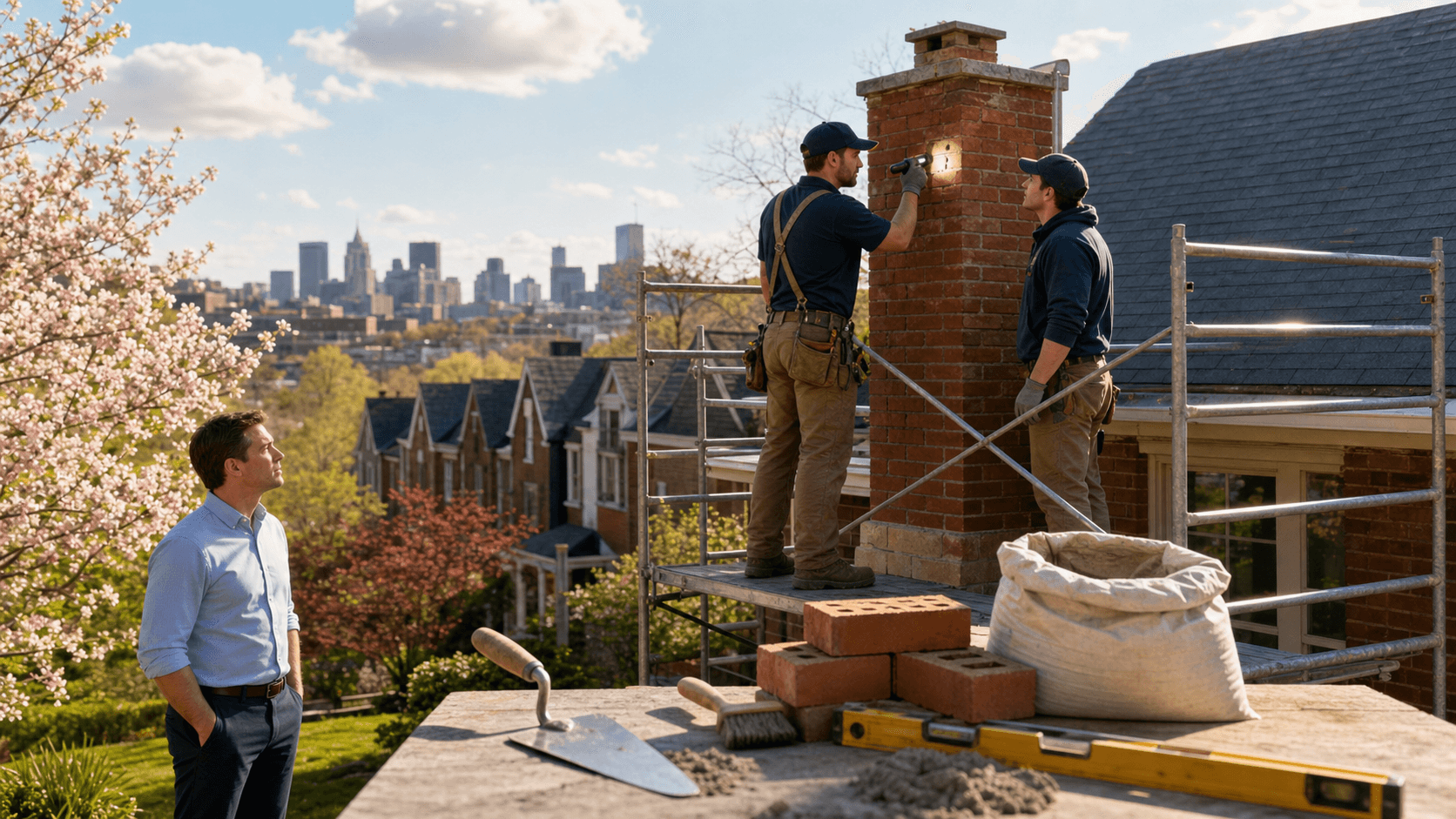
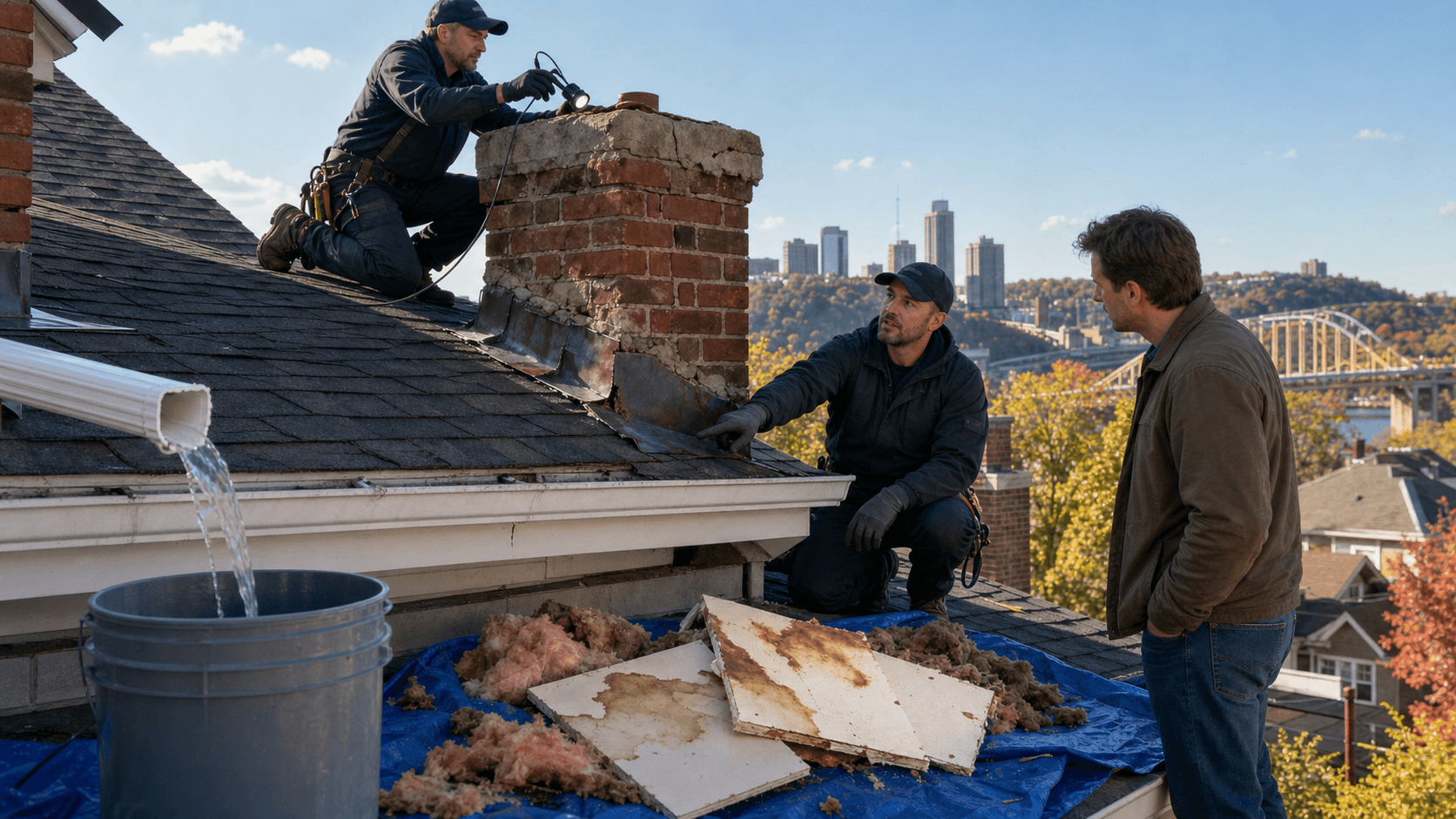
Fixing chimney leaks starts with finding the true source, not just the place where the water finally appears. A professional inspection will look at both the outside and the inside of your home.
A CSIA-certified technician will usually do the following:
- Inspect the crown, cap, flue opening, and top courses of brick
- Check the faces of the brick and mortar joints for cracks and gaps
- Look closely at the flashing and how the chimney meets the roof
- Check the attic, nearby walls, and ceilings for stains or musty smells
We often take photos along the way so you can see what we see from the roof and at the chimney top. That makes it easier to understand where water is most likely entering.
For the inside of the chimney, video cameras are a big help. A chimney camera lets us:
- Inspect flue tiles or liner walls for cracks and missing mortar
- Spot open joints that can let water run behind the liner
- See how far water damage has traveled inside the structure
When needed, controlled water testing can narrow things down. We may apply water to one specific area at a time, such as:
- Just the crown
- Just the flashing line
- Specific brick courses or sides of the chimney
By watching where water shows up and how fast, we can tell if you have a roofing issue, a chimney issue, or both. In Pittsburgh, with our mix of heavy rain, snow, and wind, that local experience is key to getting the diagnosis right.
What Chimney Leak Repair Really Looks Like Step by Step
Once the leak is tracked down, repair work usually starts at the top, then moves down.
At the chimney top, common repairs include:
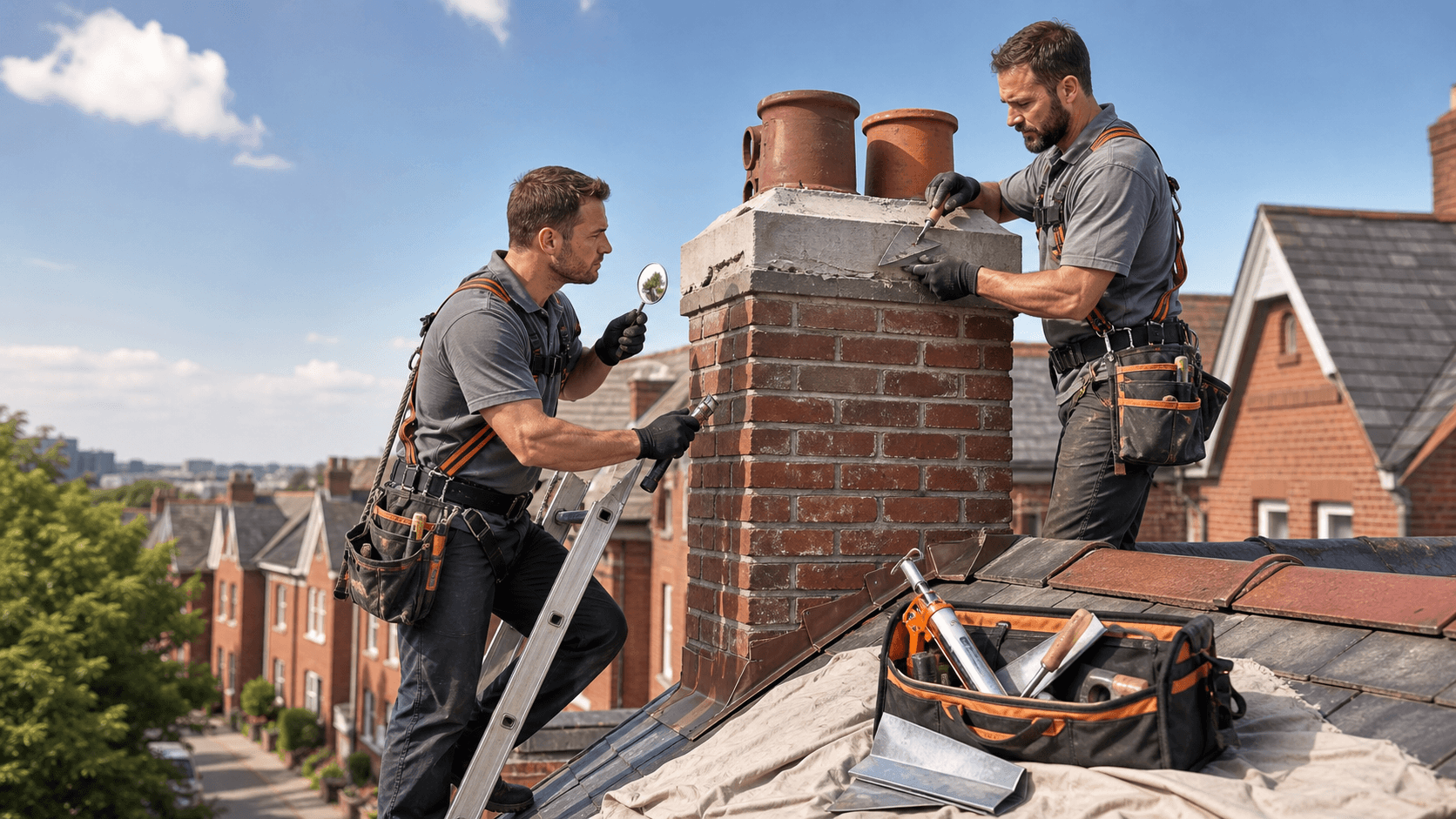
- Rebuilding or resurfacing cracked crowns, with proper slope and overhang so water runs off
- Installing or replacing chimney caps to keep out rain, snow, and animals
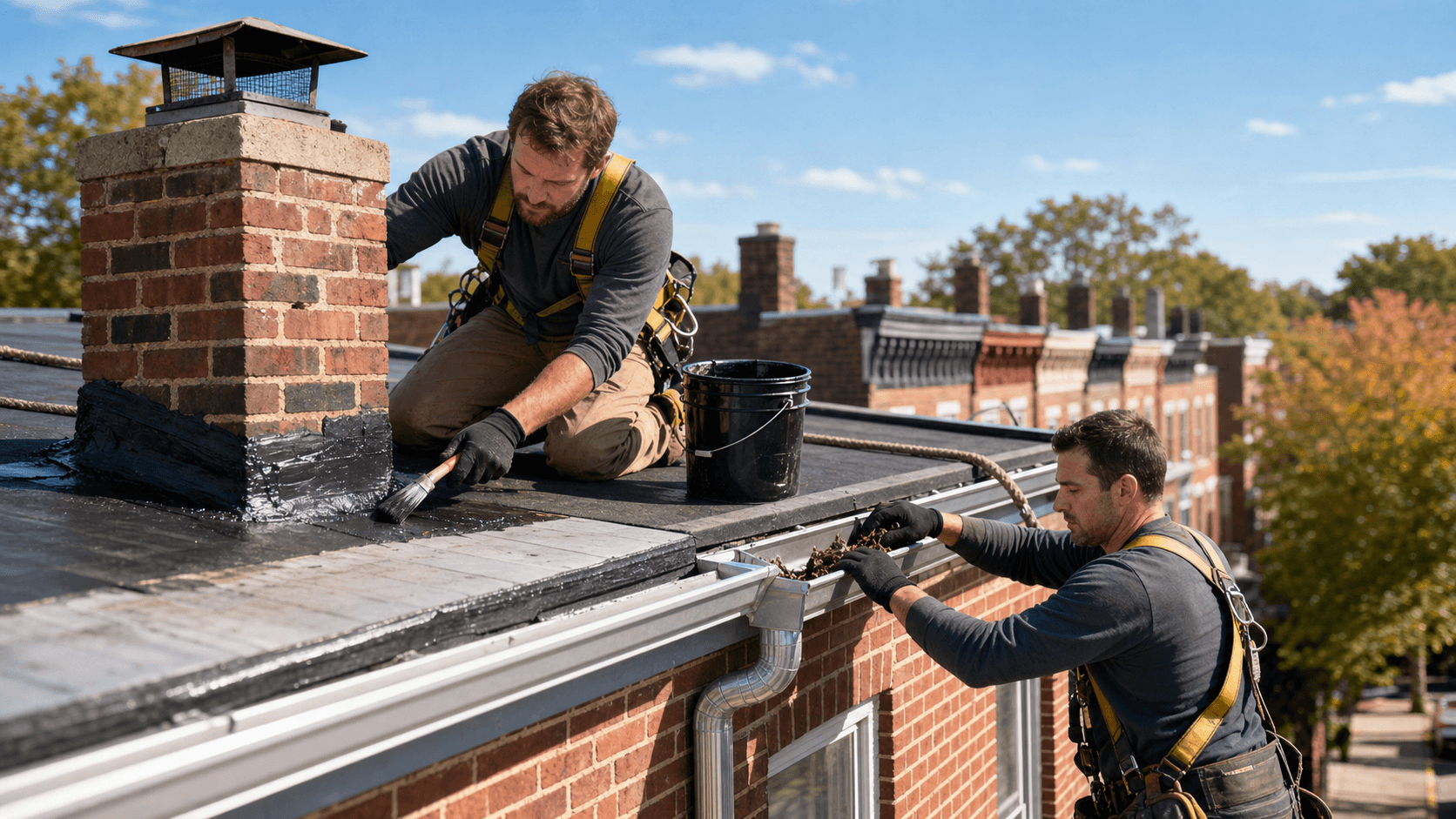
- Applying masonry-safe waterproofing that sheds water but still lets the brick breathe
Next comes repairing the masonry itself and blocking water paths. For older Pittsburgh brick, this often means careful tuckpointing. That process includes:
- Grinding out loose or missing mortar joints
- Filling joints with new mortar that matches the age and type of brick
- Tightening up the entire structure so water cannot slip through open gaps
We may also replace badly spalled or broken bricks, seal small surface cracks, and reinforce weak areas so they stand up better to future storms.
At the roofline, flashing repair is another big part of chimney leak repair in Pittsburgh. Proper flashing work usually involves:
- Removing old caulk-only fixes and damaged metal
- Installing new step and counter-flashing that locks into the mortar joints
- Making sure the flashing and roofing system tie together correctly
If water has been coming through the flue itself, the interior of the chimney may also need help. In some cases, damage to the liner or interior masonry is bad enough that relining is recommended to protect both the chimney and the surrounding walls.
After repairs, materials need time to cure and dry. It is normal to see:
- Slight color differences in new mortar or brick at first
- Some areas that look damp after a storm while products finish curing
A follow-up check after the next few heavy rains can confirm that the leak has been fully resolved.
Seasonal Timing for Chimney Leak Repair in Pittsburgh
Chimney work is possible almost any time of year, but some seasons are better for certain repairs than others. In our area, late spring through summer is usually the best window for masonry and waterproofing.
Warmer, drier weather helps:
- Mortar and crown materials cure more evenly
- Waterproofing products bond well with older brick
- Technicians work safely without snow or ice on roofs
Taking care of chimney leak repair in Pittsburgh during these months can also keep small problems from turning into bigger ones by the time fall and winter arrive.
Getting ahead of heating season matters too. When you light the first fire and send heat up a damp, damaged chimney, you can:
- Speed up cracking in already weakened masonry
- Draw more moisture into existing gaps
- Make minor leaks worse over one cold season
Many homeowners choose to pair leak repairs with an annual chimney sweeping and safety inspection. That way, any related structural or draft issues are caught at the same time.
Pittsburgh weather is known for fast changes, so it helps to be flexible on timing. Rain, humidity, and big temperature swings can shift the schedule by a few days, but a clear plan and good communication keep the project on track.
Protect Your Pittsburgh Brick Home From the Next Storm
Waiting until you see ceiling stains, flaking paint, or pieces of brick on the ground often means the leak has been going on for a while. Earlier attention almost always leads to easier repairs and less stress.
A local, CSIA-certified company that works with older Pittsburgh brick homes every day understands how these chimneys were built, how they age, and how our weather pushes water into every small opening. That knowledge shapes how we inspect, diagnose, and repair leaks so they stay fixed through future storms.
Get Started With Your Project Today
If you are seeing water stains, masonry damage, or a musty smell around your fireplace, now is the time to schedule professional chimney leak repair in Pittsburgh. At Chimney Fixers SEO, we carefully inspect your system, identify the true source of the leak, and recommend clear, practical solutions that fit your home and budget. We explain every step so you know exactly what to expect from your repair. Ready to move forward or have questions about your specific issue? Simply contact us and we will help you protect your chimney and home.